Beethoven 9
A concert performance of Beethoven's Symphony No. 9 and Tchaikovsky's Romeo & Juliet 'Fantasy Overture'.
A brief introduction:
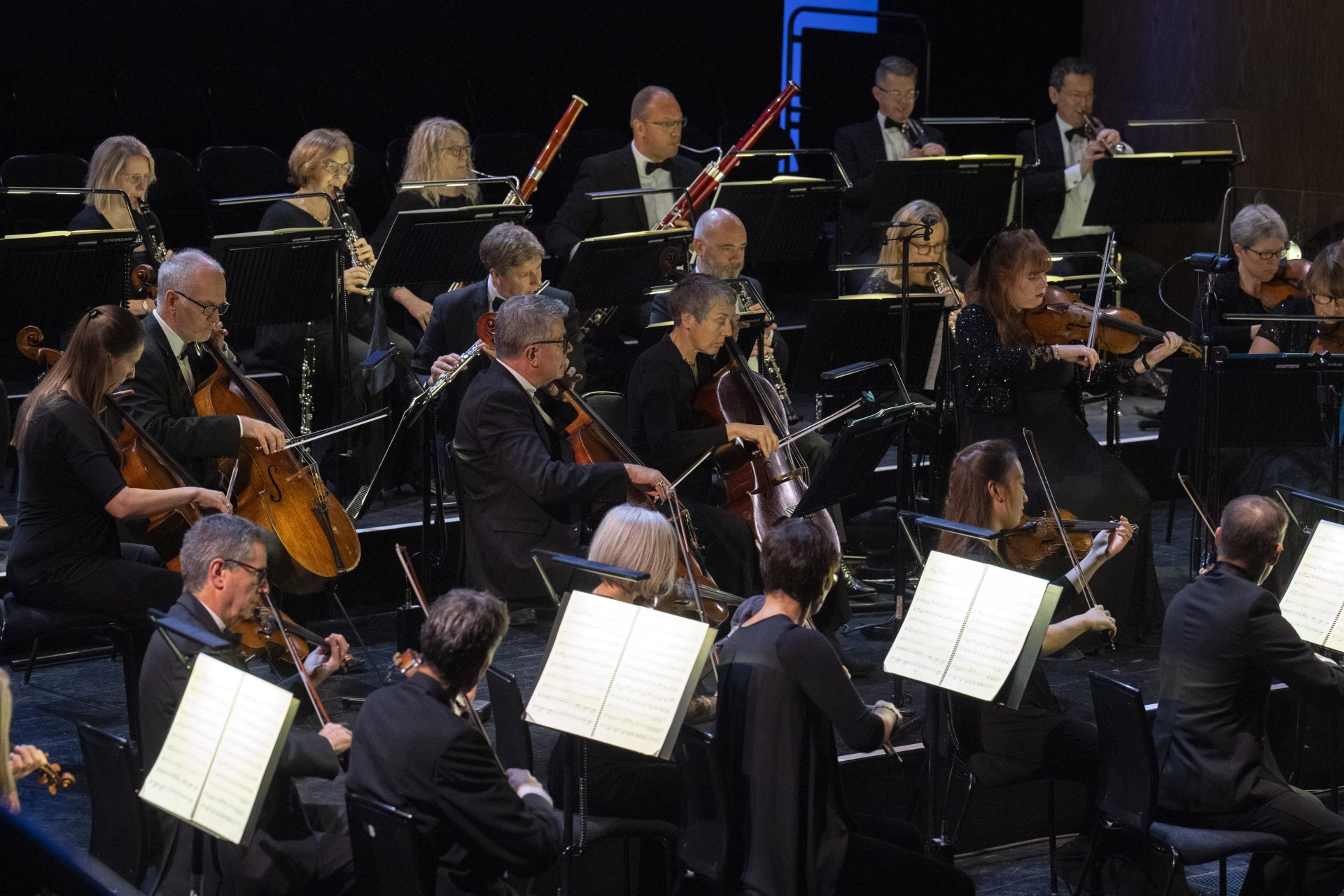
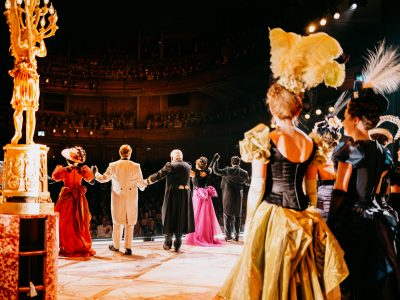
Photo: Richard Hubert Smith
Tragedy gives way to hope in a concert celebrating the resilience and passion of the human spirit – pairing Tchaikovsky’s Fantasy-Overture Romeo and Juliet with Beethoven’s monumental Symphony No. 9.
Tchaikovsky takes nearly 3 hours of Shakespearean drama and distils it down to a blazing 20-minute orchestral movement that captures the essence of the tragedy rather than its action. We hear the tussling conflict between Montagues and Capulets as well as the inexorable pull of desire between the two young lovers, and this push-pull of love and destruction continues to the very end: a final restatement of the love theme against the distant rhythmic rumble of a funeral march.
Beethoven’s Symphony No. 9 stretches the classical symphony almost to breaking point in a revolutionary work that moves from elemental chaos – perhaps primordial earth itself – to order, unity and brotherhood. Confounding every musical expectation, it somehow resolves all its questions and challenges in a chorale finale still unequalled, either for technical demands or for its powerful affirmation of humanity’s essential goodness.
Why not to miss it:
This is a chance to hear both these orchestral classics performed by the Glyndebourne Sinfonia and their Principal Conductor Adam Hickox, joined for the Beethoven by both vocal soloists and the massed voices of the Glyndebourne Chorus.
There’s always an autobiographical angle with Tchaikovsky. We see it in Eugene Onegin, in his Fifth Symphony, and Romeo and Juliet is no exception. The composer reveals something intimate of himself in a piece that may outwardly capture the loves – and deaths – of Shakespeare’s star-crossed teenagers, but which may in fact explore his own inadmissible emotions as well as the teenage suicide of the object of his own affections: Eduard Zak.
If the Tchaikovsky is a musical confession, Beethoven’s Symphony No. 9 is a manifesto in sound: a vision of a world at once more complicated and radiantly simpler than any symphony had hitherto imagined. Revolution pulses through its opening, but resolution arrives in a chorale of radiant optimism and directness.
A great moment to look out for:
The questions and provocations of the first three movements in Symphony No. 9 are gloriously answered by the finale – but not without a fight. Beethoven first has to reject all his previous ideas: after a clashing, dissonant opening he one by one introduces the themes of each of the earlier movements. But these musical gambits are roundly rejected by the lower strings, who instead insist on a new, nascent theme we don’t yet quite recognise.
That theme is – of course – Beethoven’s setting of Schiller’s ‘Ode To Joy’, the poet’s anthemic celebration of the unity of all mankind. It’s a melody that only gradually takes shape, teased in a series of variations before finally stated in the form we all know. The solo baritone takes up the tune, introducing the other soloists and chorus, who at last all join in one of the most original and arresting finales to any symphony: a plea for brotherhood, unity and peace in a world of dissent and conflict.
Cast & Creative Team:
Principal Conductor Adam Hickox conducts the Glyndebourne Sinfonia, Glyndebourne Chorus and soloists in this exciting programme.
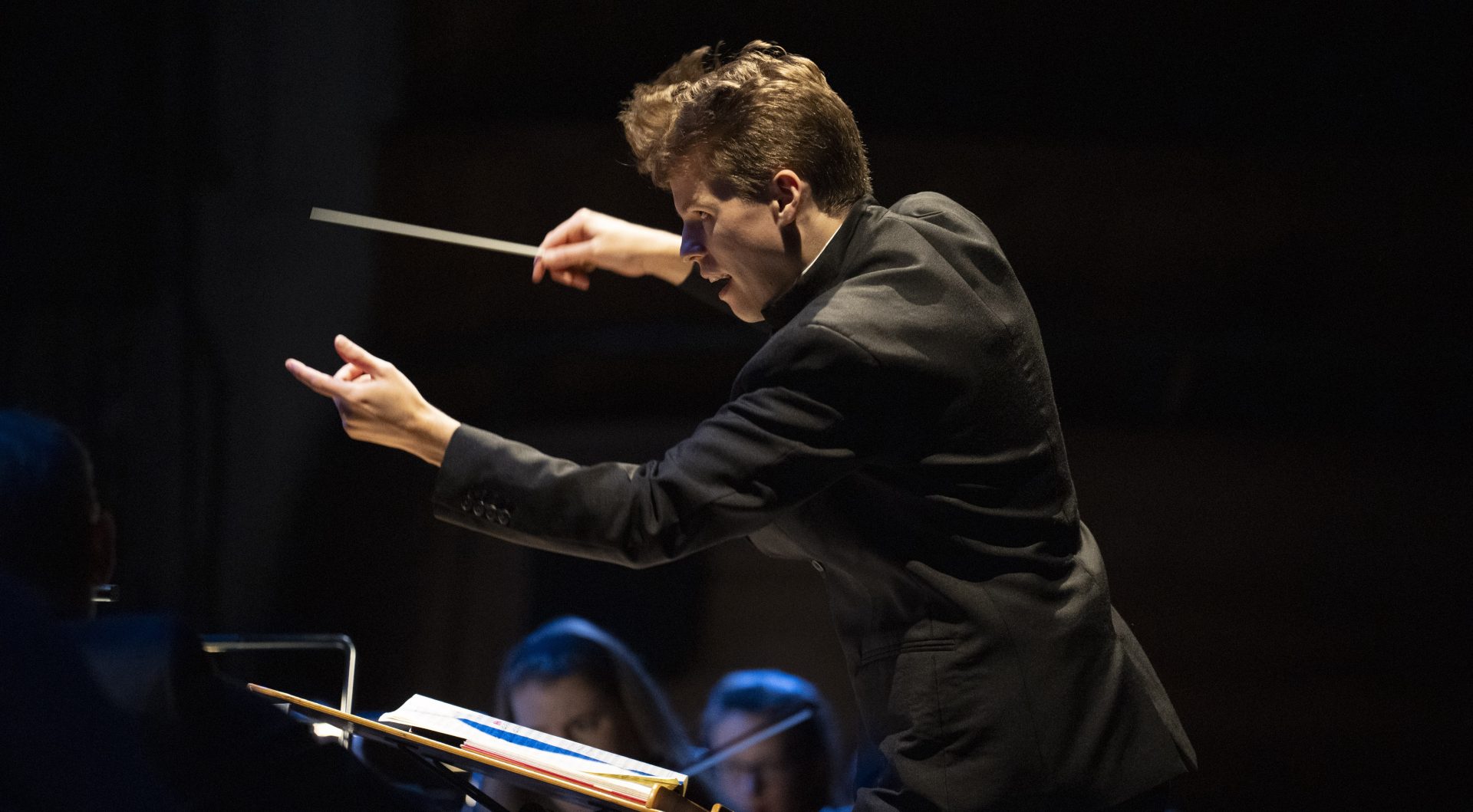
Adam Hickox conducting during Autumn Season 2024
Arts Council England
Dunard Fund
Laidlaw Opera Trust
Tioc Foundation


Main image: Kelly Bowden/Getty Images; Image design by Louise Richardson