


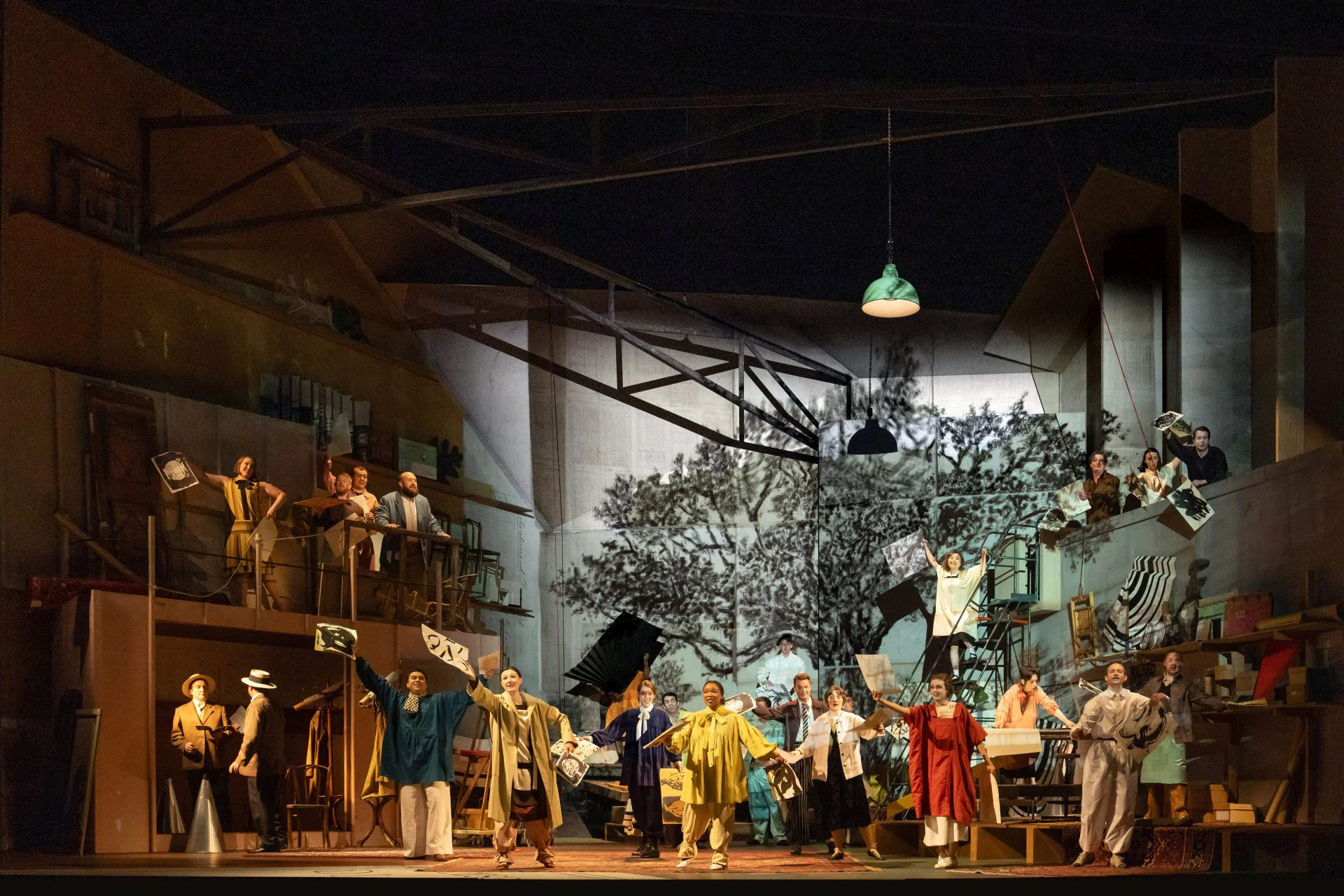
The Birth of Opera
How Monteverdi's L'Orfeo defined opera as we know it
Art that had been static, symbolic – a vehicle for information rather than emotion – suddenly began to look different. Human forms softened along with their expressions; stiff limbs warmed into fleshy musculature, pulsing with blood; balanced and ordered compositions now churned with visual drama and tension.
And it was the same story in music.
Sounds once content to mimic cosmic order or divine beauty now sought for the first time to express the full gamut of the human experience: not just wonder and spiritual devotion, but pain, loss, ecstasy and anger too. We hear this vividly in the development of the madrigal – the genre that dominated the secular vocal music of this period. Strict rules that had governed harmony were first bent and then broken: emotion, not form, was king in works that convulsed and churned with agonising intensity.
But what happens when the content outgrows the musical form? Opera didn’t yet exist; now it was necessary to invent it.
Enter Claudio Monteverdi with L’Orfeo. Premiered privately at the Gonzaga court in Mantua in 1607, this wasn’t the first ever opera – that title is usually ascribed to Jacopo Peri’s Dafne (1597) – nor even the earliest surviving opera – that’s Peri’s Euridice, from 1600. So why do so many histories start here?
If you ask Stravinsky, the answer is clear. ‘The scope of [Monteverdi’s] music both as emotion and as architecture…is of a new dimension, compared to which the grandest concepts and the most profound ardours and dolours of his predecessors shrink to the status of miniatures’.
For Stravinsky, then, it’s a question of intensity: Monteverdi turned up the dial, the scope of what opera could be. But it’s not the full story. Monteverdi’s innovation in Orfeo is one of intensity but priority. Monteverdi was the first composer to prioritise not just narrative but emotion through music. His Orfeo is the birth of opera, not just music on stage.

Portrait of Claudio Monteverdi by Bernardo Strozzi (c.1630).
It’s a shift outlined by La Musica herself in the Orfeo Prologue. ‘I am Music,’ she sings, ‘who with sweet voice know how to soothe each troubled heart. And, now with passion, now with rage, my power can inflame the noblest spirit.’ As a mission-statement for opera it’s ambitious, to say the least.
Artistic motivation is one thing, but creativity in the 17th century required patronage. Monteverdi’s first opera reflected the wealth, power and ambition of Vicenzo Gonzaga, Duke of Mantua – ambitions spiced by the nobleman’s family associations with Florence. If Mantua was opera’s birthplace, then Florence was where the new art-form was conceived.
Italy at the turn of the 17th century was a shifting patchwork of rival kingdoms and princely courts. And rivalries were not limited to military or political strength; artistic competition was rife – the engine for many of the period’s greatest artworks. Not only did art and music serve as propaganda, feeding the reputation and status of noble families, but it also kept a court’s nobles occupied and – crucially – out of politics. Men busy with arts and sciences had less time to plan coups or conspiracies. Hundreds of Cameratas – private artistic societies – sprung up across Italy, but it was the Florentine Camerata whose research and ‘professional nostalgia’ into ancient Greek models of drama accidentally invented opera.

Portrait of Duke Vincenzo Gonzaga, Monteverdi’s employer, by Frans Pourbus the Younger.
Admiration for the Classical arts was widespread. We see the evidence in Vicenza’s Teatro Olimpico – Italy’s oldest surviving indoor theatre, and a lavish recreation of a Roman amphitheatre – as well as in the printed texts of the period, dominated by Greek and Roman plays. Italian scholars believed (mistakenly, we now think) that Classical dramas were entirely sung, and it was this conviction that led to the earliest operatic experiments: not conceived as musical innovations but rather as faithful recreations of a lost artistic past. Ironically it was under this illusion of historical conservatism that one of music’s boldest new forms was pioneered.
Part of the desire to return to Classical drama was the belief that these works captured the truth of life. In music, that demanded not only a fluid, artless kind of writing – conversation in sound – but a new degree of harmonic flexibility and expressive range. The first problem was solved by the invention of recitative. The music we are now often guilting of treating as secondary to arias, as the workhorse of plot-exposition, was crucial to opera’s capacity to mirror life, the engine of real-time emotion and expression. For Monteverdi it was central to his desire to discover ‘the true way of imitation’ in his music: a paradox that seeks to square the impossible circle of art.
The second problem – the evolution of a more extreme harmonic language – was more challenging to resolve. ‘Pleasant sounds’ were no longer enough; characters needed, as composer Giulio Caccini put it, to ‘speak in tones’. Monteverdi responded enthusiastically in Orfeo with extreme gestures: the sudden harmonic rupture when the messenger brings the news of Euridice’s death; the grinding dissonances of Orfeo’s reaction to his wife’s loss in ‘Tu sei morta’. Today the effect is shocking and immediate, but in 1607 it seemed to some like a sonic assault.
Chief among the critics of this new style was Giovanni Artusi, an influential theorist, who didn’t pull his punches when he described it as: ‘A cause for laughter, joking and contempt… These men of whimsy think their songs produce new harmony and new affect but instead give birth to new nausea, new contempt and new confusion…full of things which confound the good and the beautiful in music.’
But there was no putting the genie back in the bottle. Good and beautiful were no longer enough for an art form that aimed to be no less intense, instinctive, direct or confronting than life itself. No wonder, then, that opera has always been fascinated by music and musicians. Monteverdi’s Orfeo was the beginning of hundreds of Orpheus operas, including works by Haydn, Gluck, Offenbach, Harrison Birtwistle and Philip Glass, each striving to capture the essence of music’s power to express, to move, to defeat even death itself. The power of music is both why opera exists, as well as the argument it seeks to make: the theory and its proof.
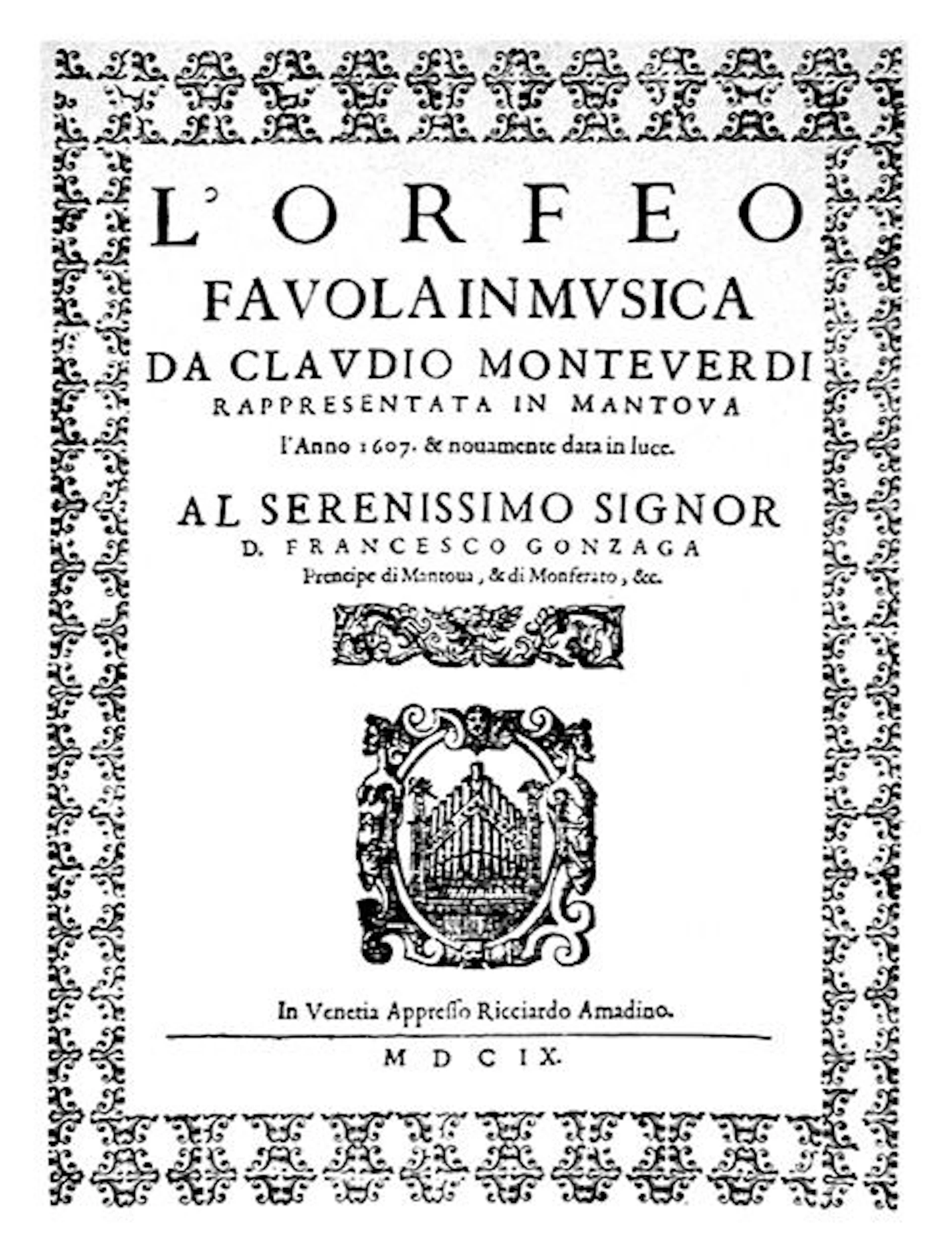
Front cover of the score of L’Orfeo, published in Venice in 1609.
400 years on since the birth of opera, scientists and scholars still struggle to prove why a rhythm makes us dance or a song makes us cry. Opera has spent that time throwing the finest composers, singers, directors, poets and players at the question. Perhaps that very persistence, as well as that little tug of excitement and nervous energy we all feel as the house lights dim and silence falls before a performance, perhaps that is the answer.
Alexandra Coghlan is our Opera Specialist at Glyndebourne.
Glyndebourne’s first L’Orfeo
During Festival 2026, our first ever production of Monteverdi’s L’Orfeo took to the stage, directed by Olivier-Award winner William Kentridge.
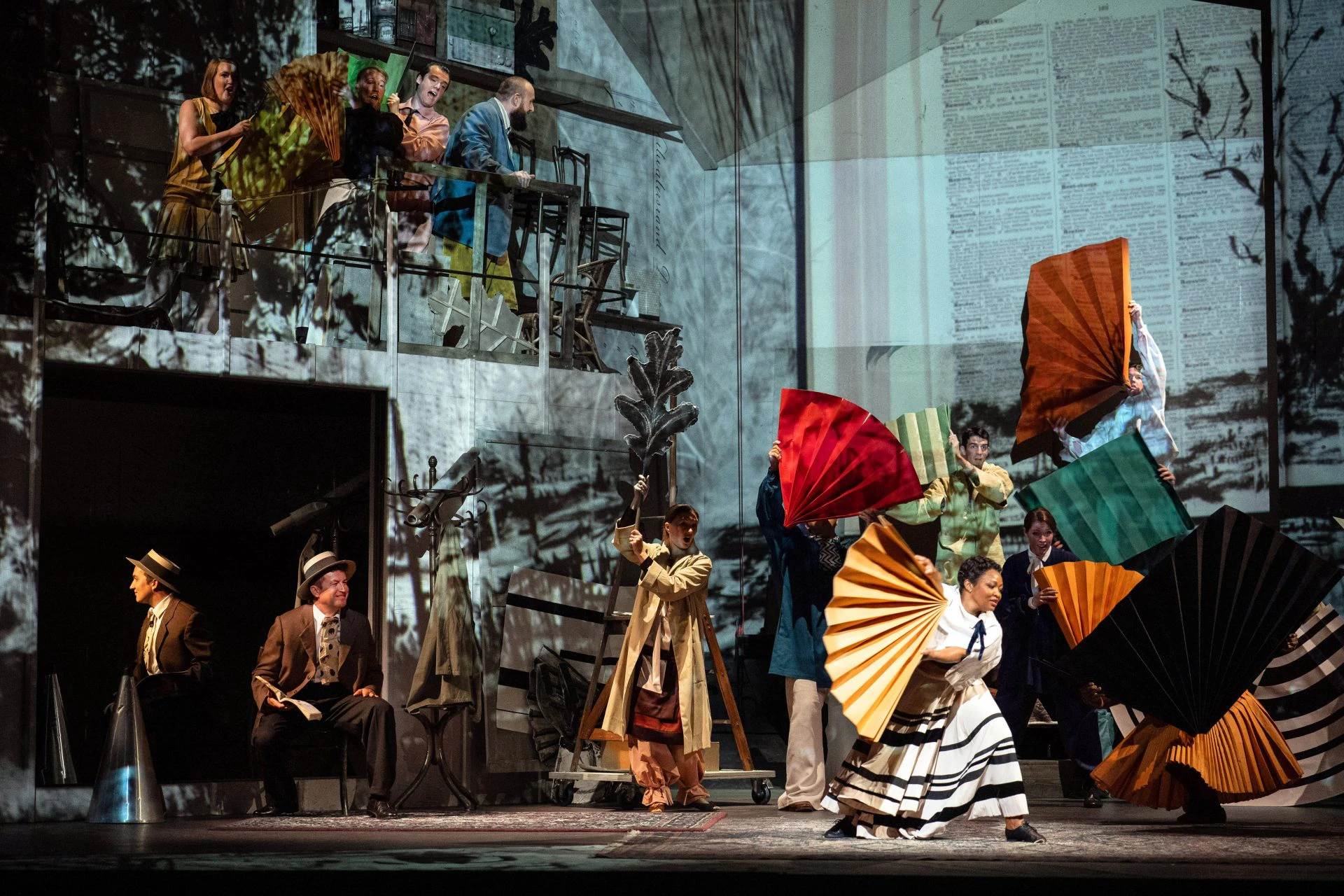
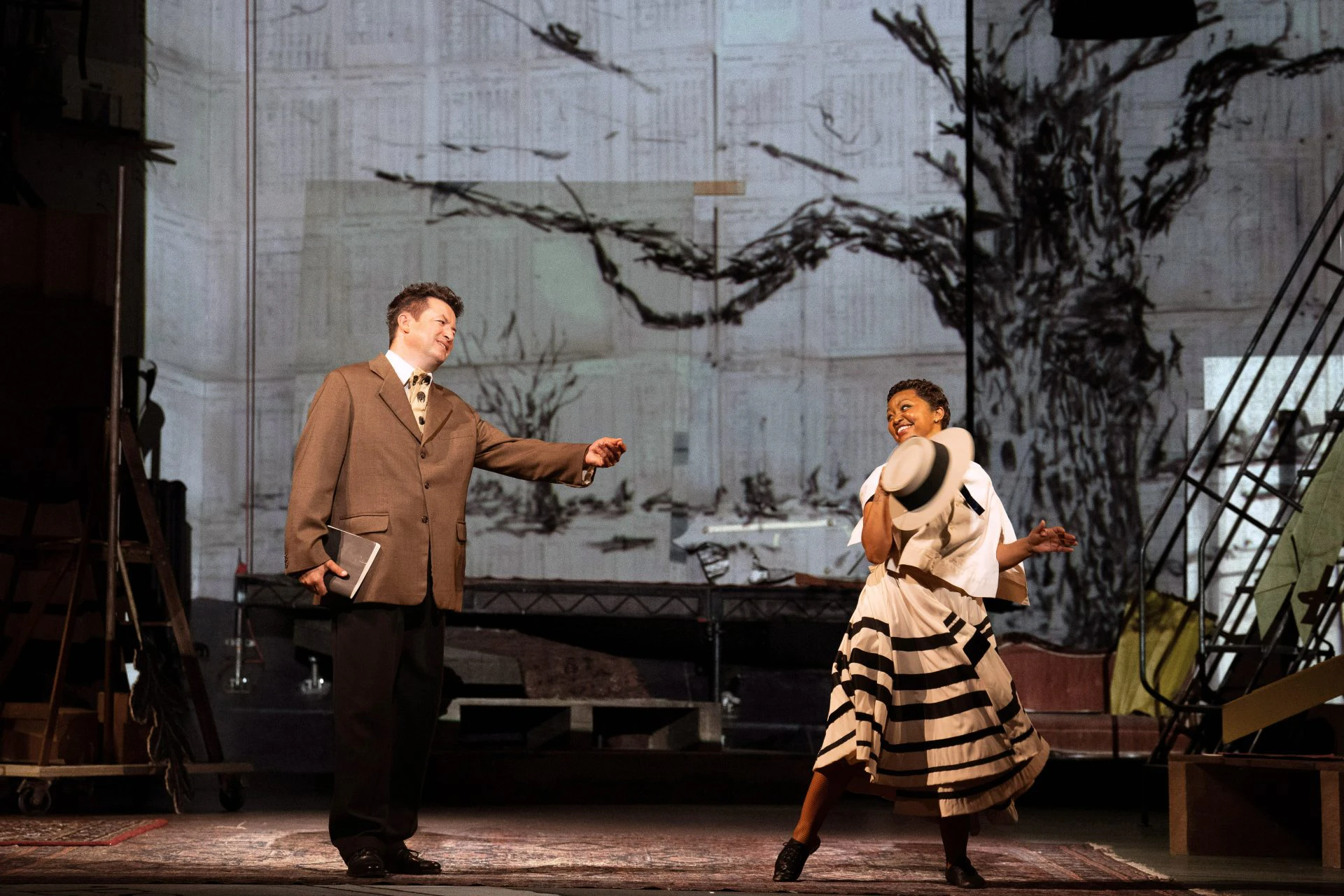
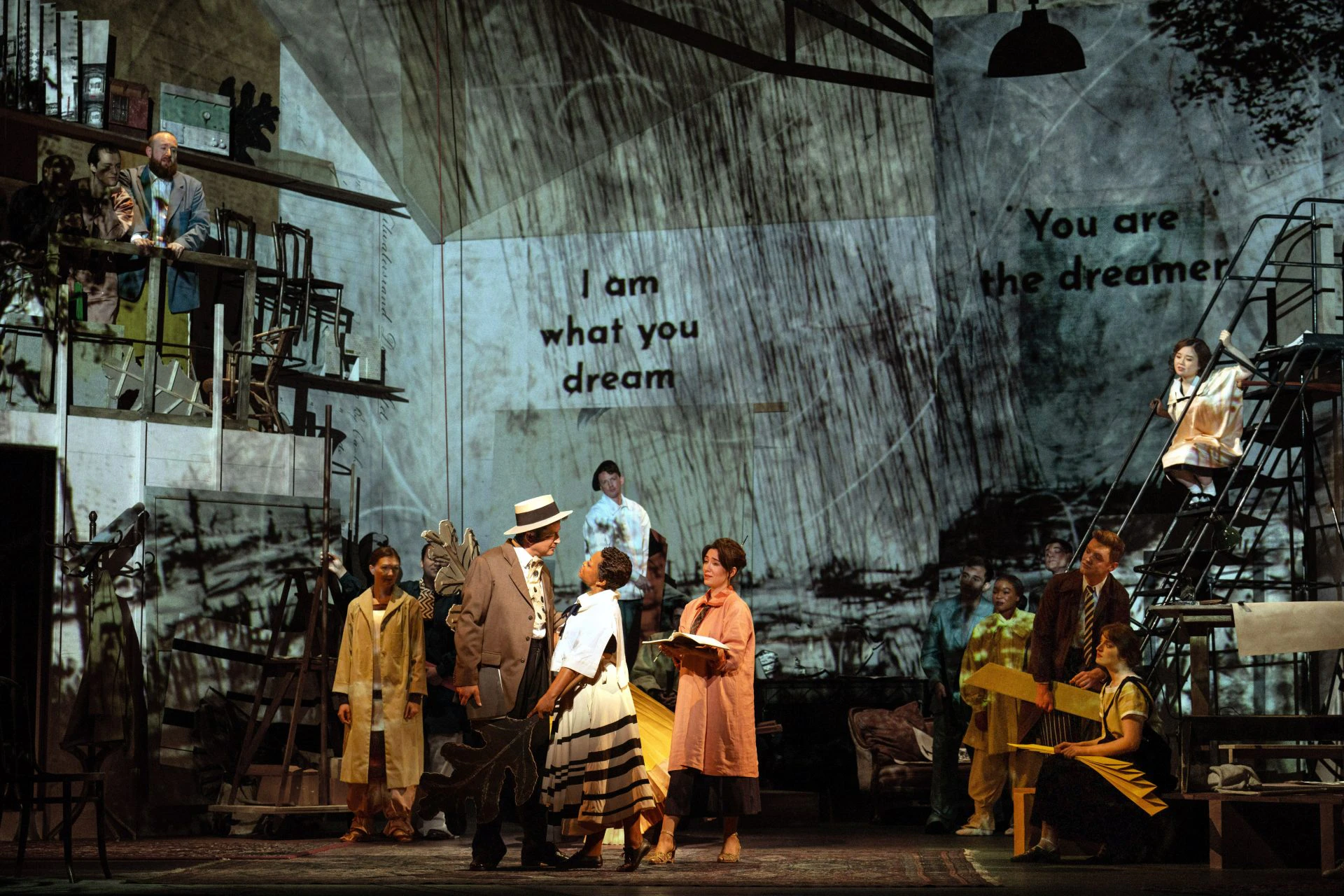
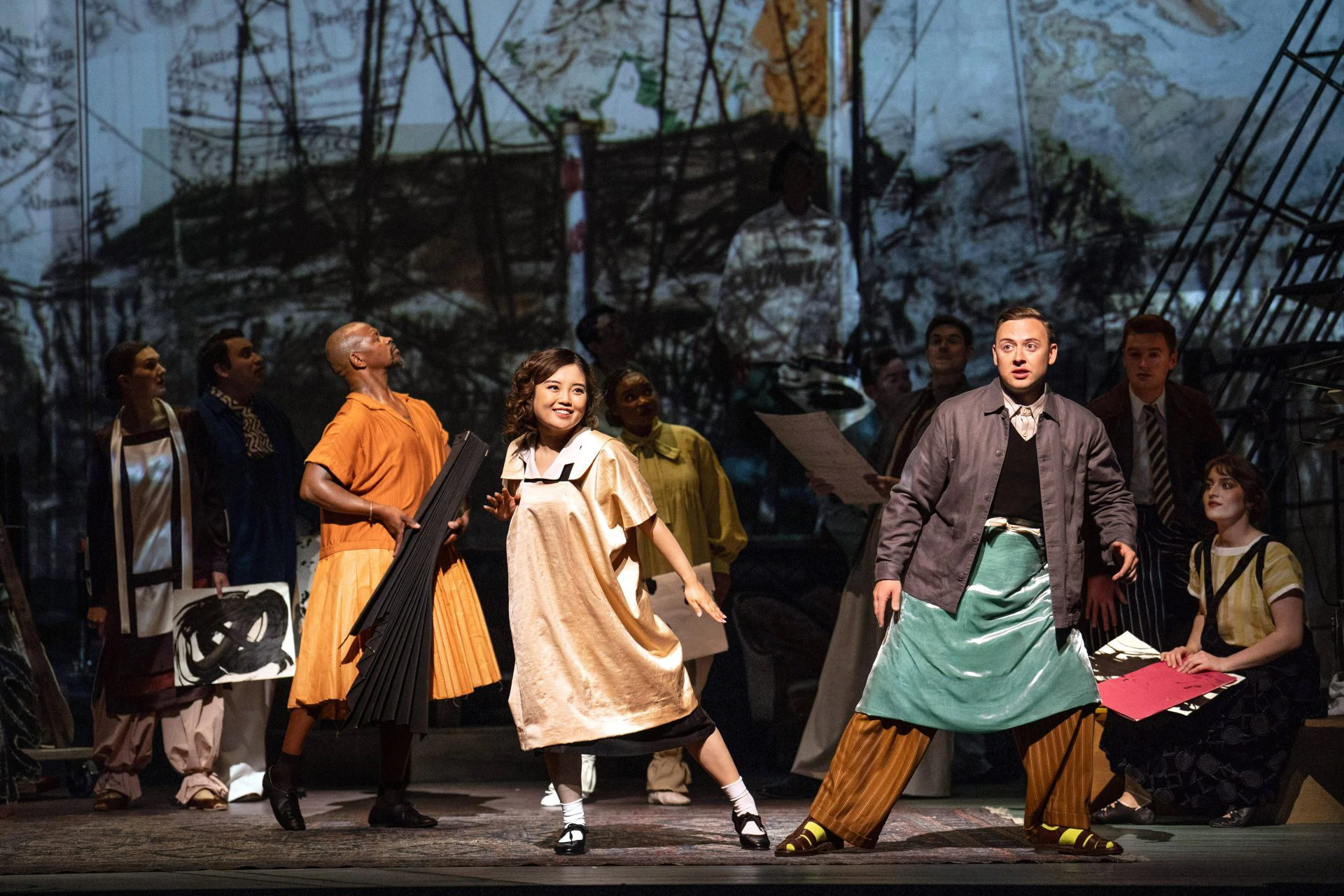
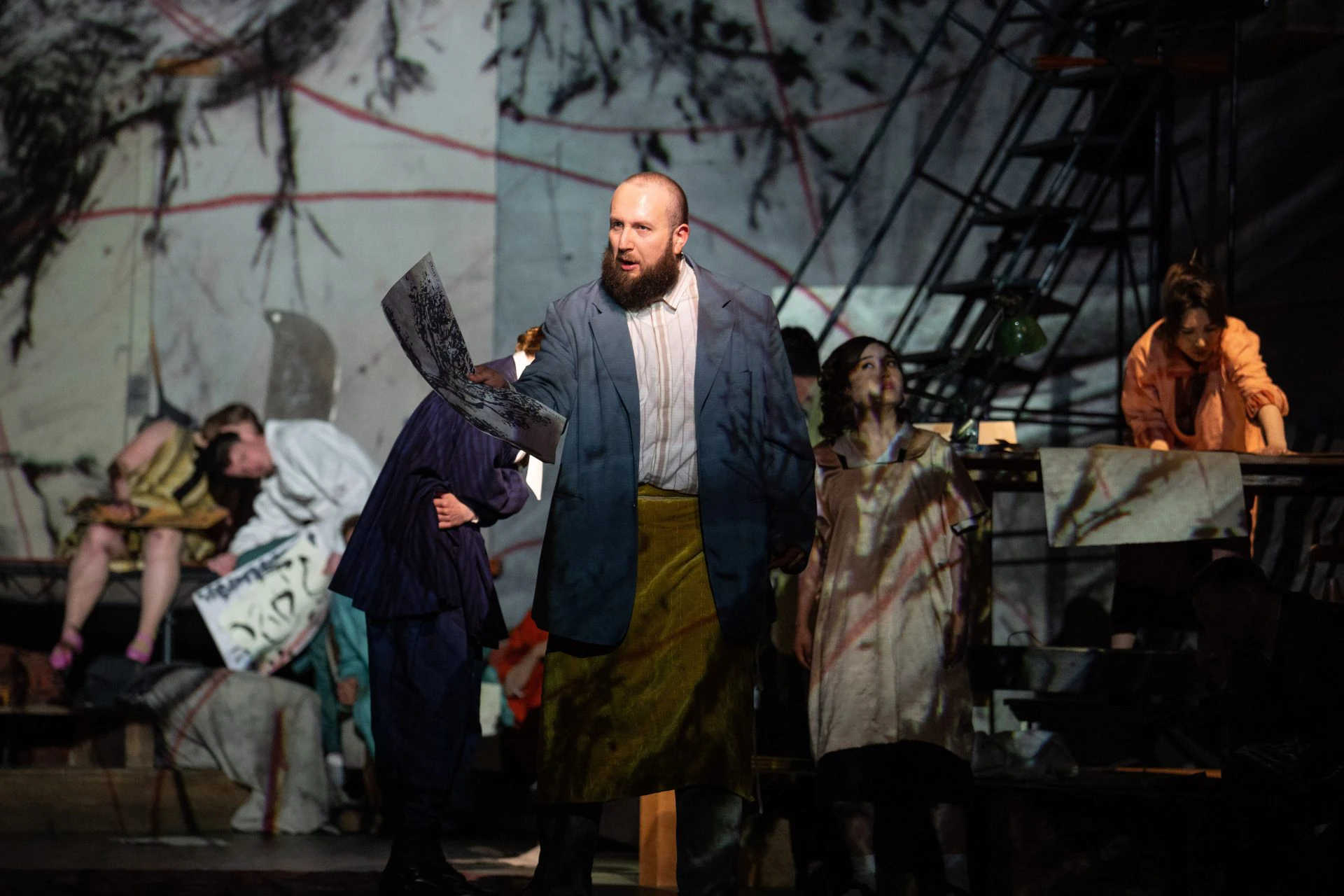
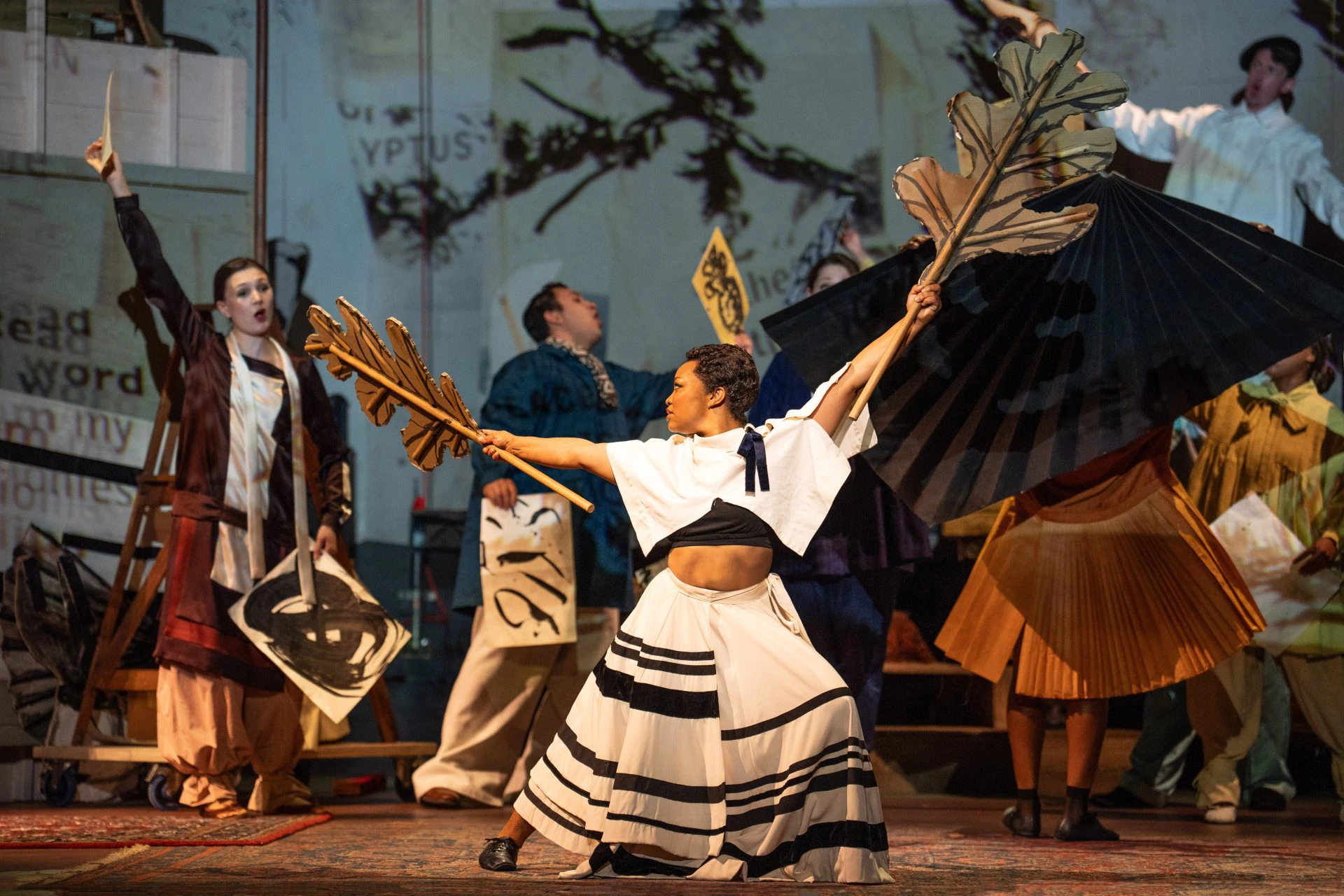
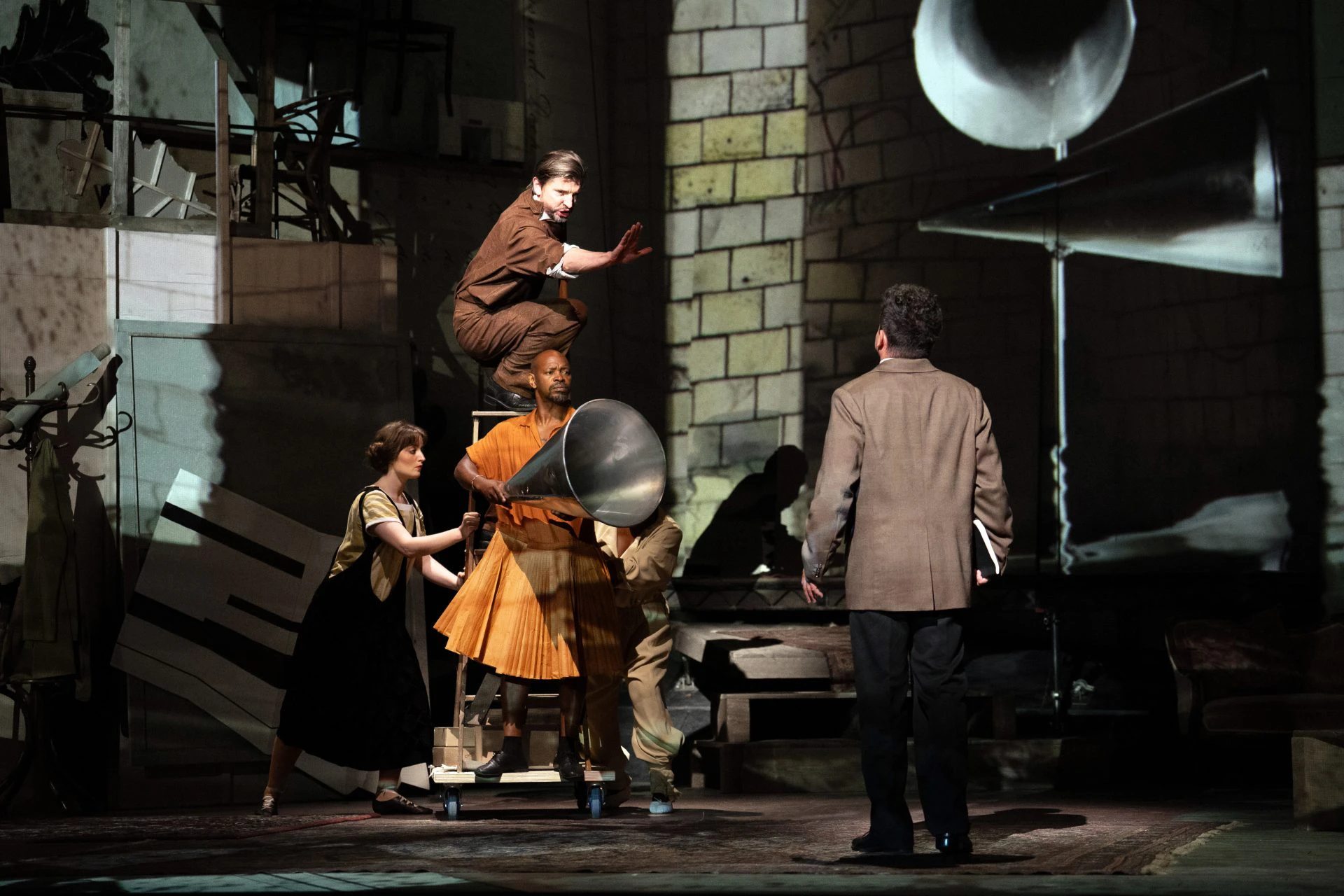
Photos by Richard Hubert Smith
Image credits:
Bernardo Strozzi, Public domain, via Wikimedia Commons
Frans Pourbus the Younger, Public domain, via Wikimedia Commons
Claudio Monteverdi (1567–1643), Public domain, via Wikimedia Commons


