


Crafting comedy in Il turco in Italia
Mariame Clément and Ian Rutherford on Rossini’s sparkling comedy.
After directing a new production of Le nozze di Figaro for the 2025 Festival, Mariame Clément’s next production at Glyndebourne is a revival of 2021’s Il turco in Italia. Although both are ensemble comedies, they are very different works: has Mariame’s approach to directing changed over time?
‘I have had the same approach for Turco, Figaro, Don Pasquale: to take it very seriously and not go in for superficial situations,’ says Mariame. ‘To really work on the text in detail, especially in the recits. Not just at a surface level like inserting gags but exploring what is the motor of the scene, where it is going, where are the tensions?
‘It is important to make sure the singers understand exactly what they are saying and why they are saying it. How I start every rehearsal is reading the text with the singers and discussing what is being said: why are you saying it, to whom, what does it announce? It gives the comedy a strong architecture, a strong skeleton to build on.’
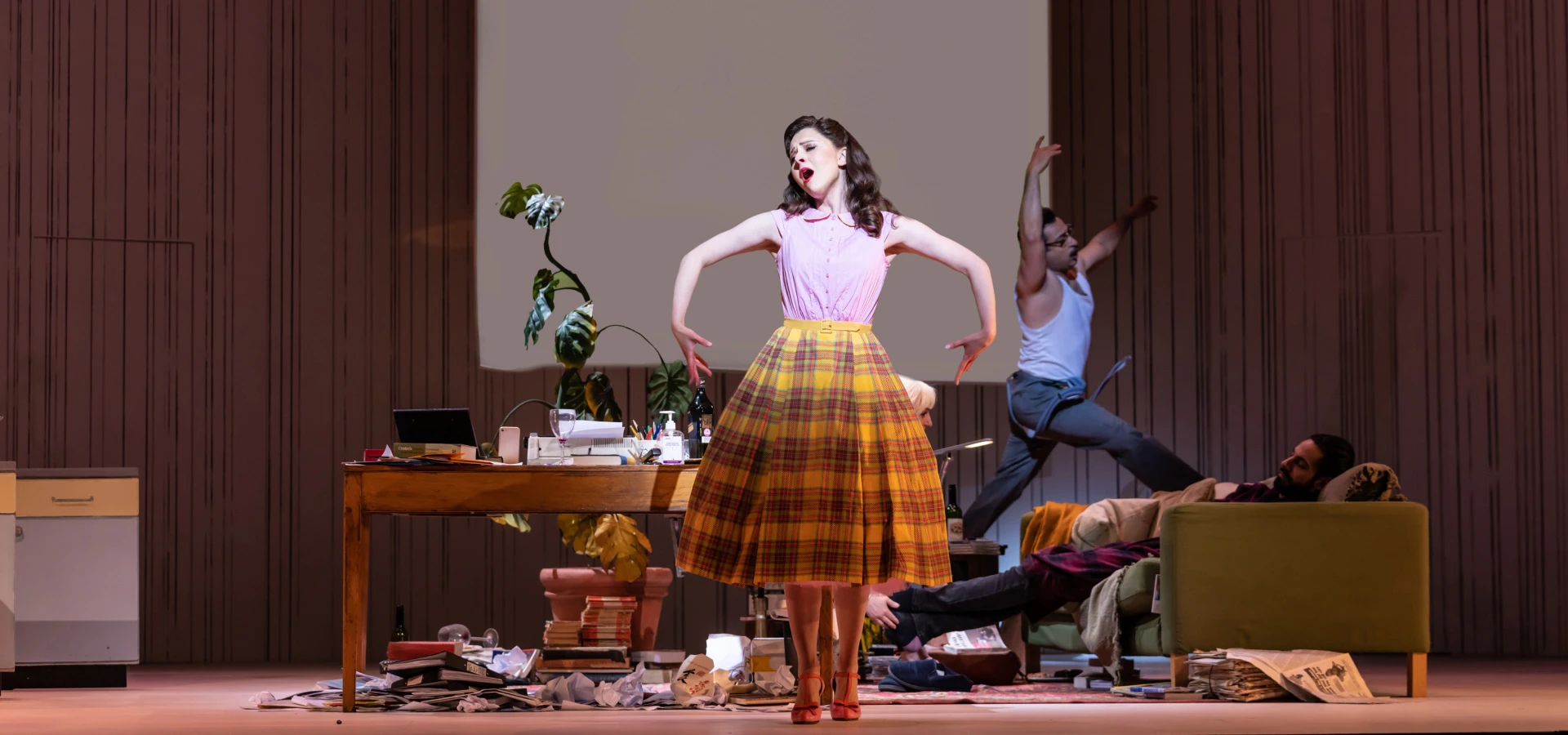
Ian Rutherford worked with Mariame as Assistant Director on the original Festival 2021 production of Turco, as Revival Director for its first revival during Autumn Season 2024, and returns to revive the production again in Festival 2026. I speak to Mariame and Ian separately but their priorities in directing comedy are strikingly similar. ‘The singers need to know their relationships to everybody else and have to believe in the characters,’ says Ian. ‘When you leave the stage: where are you going, why are you leaving? It affects your exit and what the audience thinks about you when you’re in the wings. Here at Glyndebourne, we have so much beautiful rehearsal time where we can achieve this through practice.’
What makes audiences laugh in Turco? ‘Rossini is intrinsically funny,’ says Mariame. ‘He mastered the language of classical music, using structures and the canonic form so brilliantly. He expertly uses over-the-top repetitions, crescendos and breaks for comedic effect.
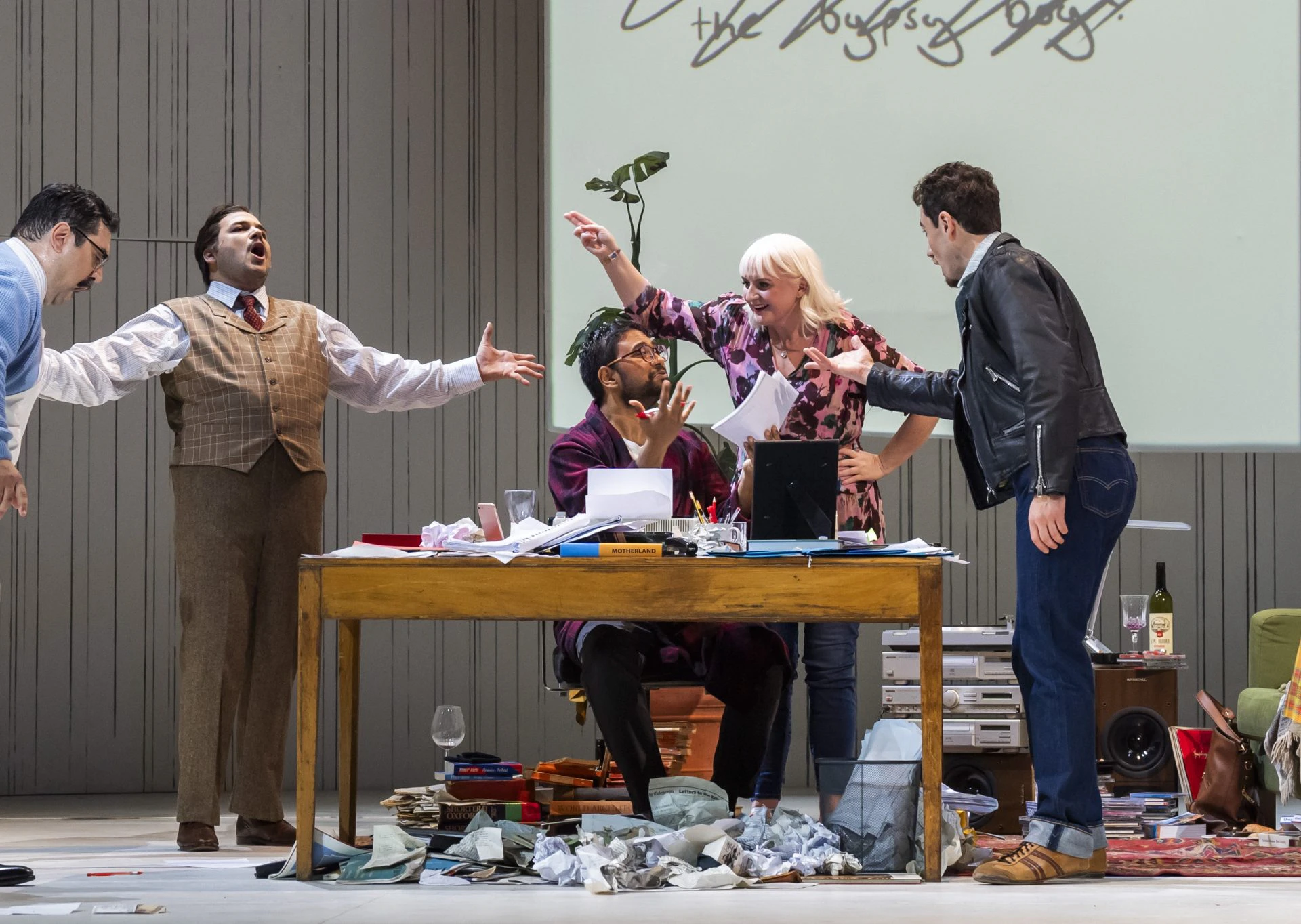
‘The text is also very yummy; very witty. In the trio in the first act, known as “Un poeta ostinato” (meaning a “stubborn poet”), there are some great lines such as “leave lovers alone and don’t interfere in their affairs, or you’ll have a badly beaten poet in your story” (“Lasci vivere i galanti e non badi al loro stato; o un poeta bastonato io farò nel dramma entrar”). And the quartet in the first act (“Siete turchi, non vi credo”) where they all sing at the same time, addressing different people in quick succession, interrupting each other midsentence (“curse him; yes you’re right!”) alongside alternating, angry asides is all very funny.
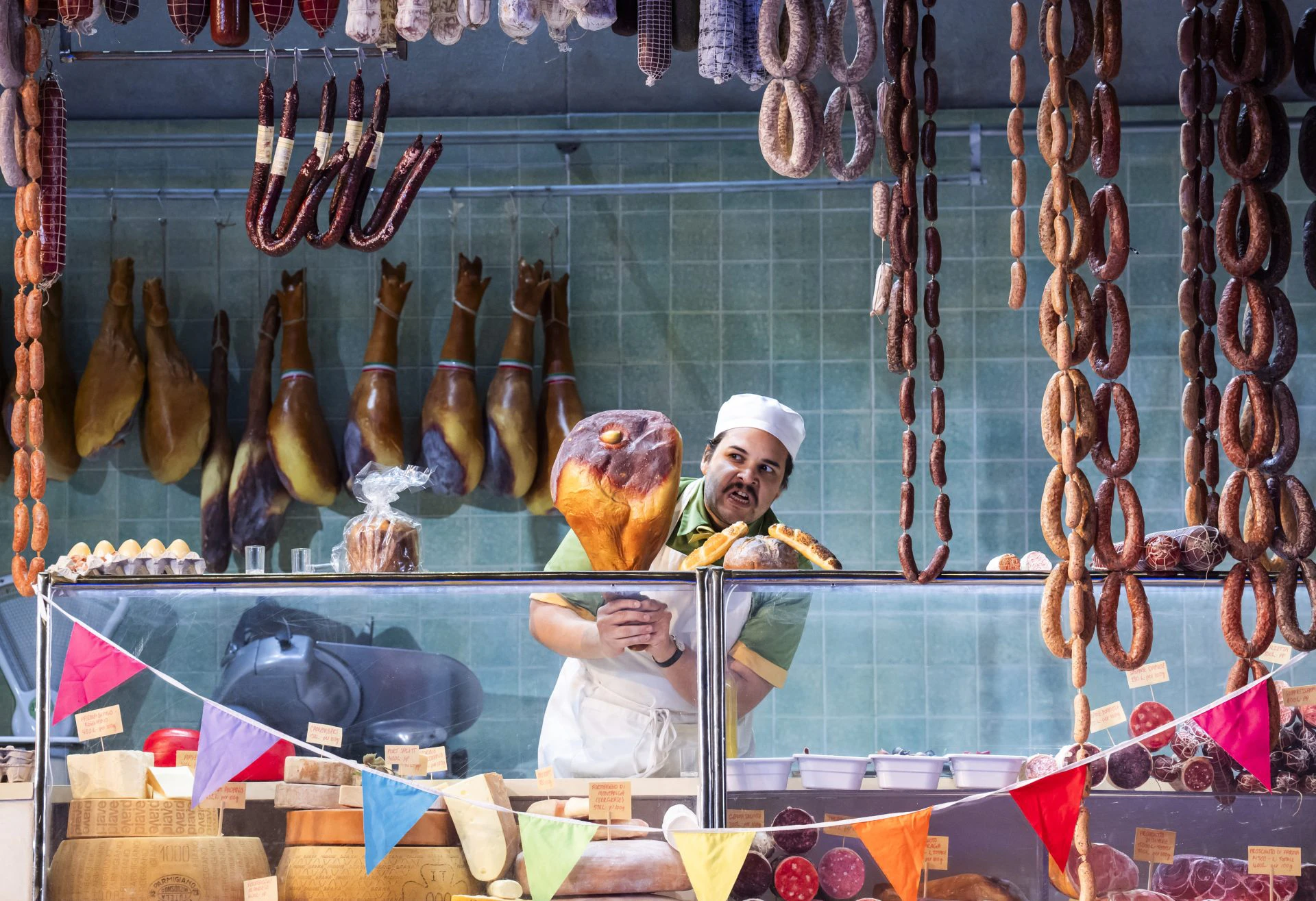
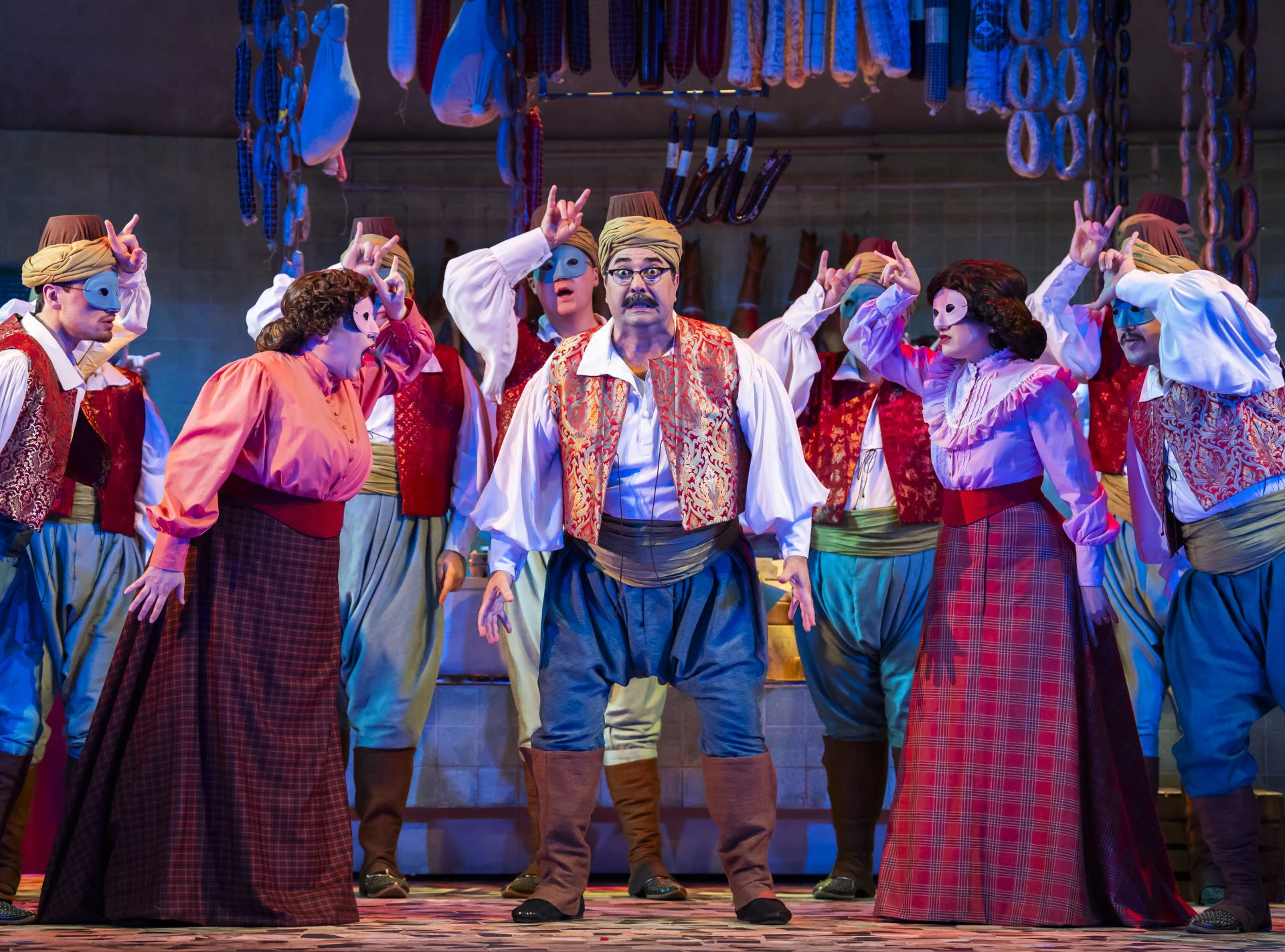
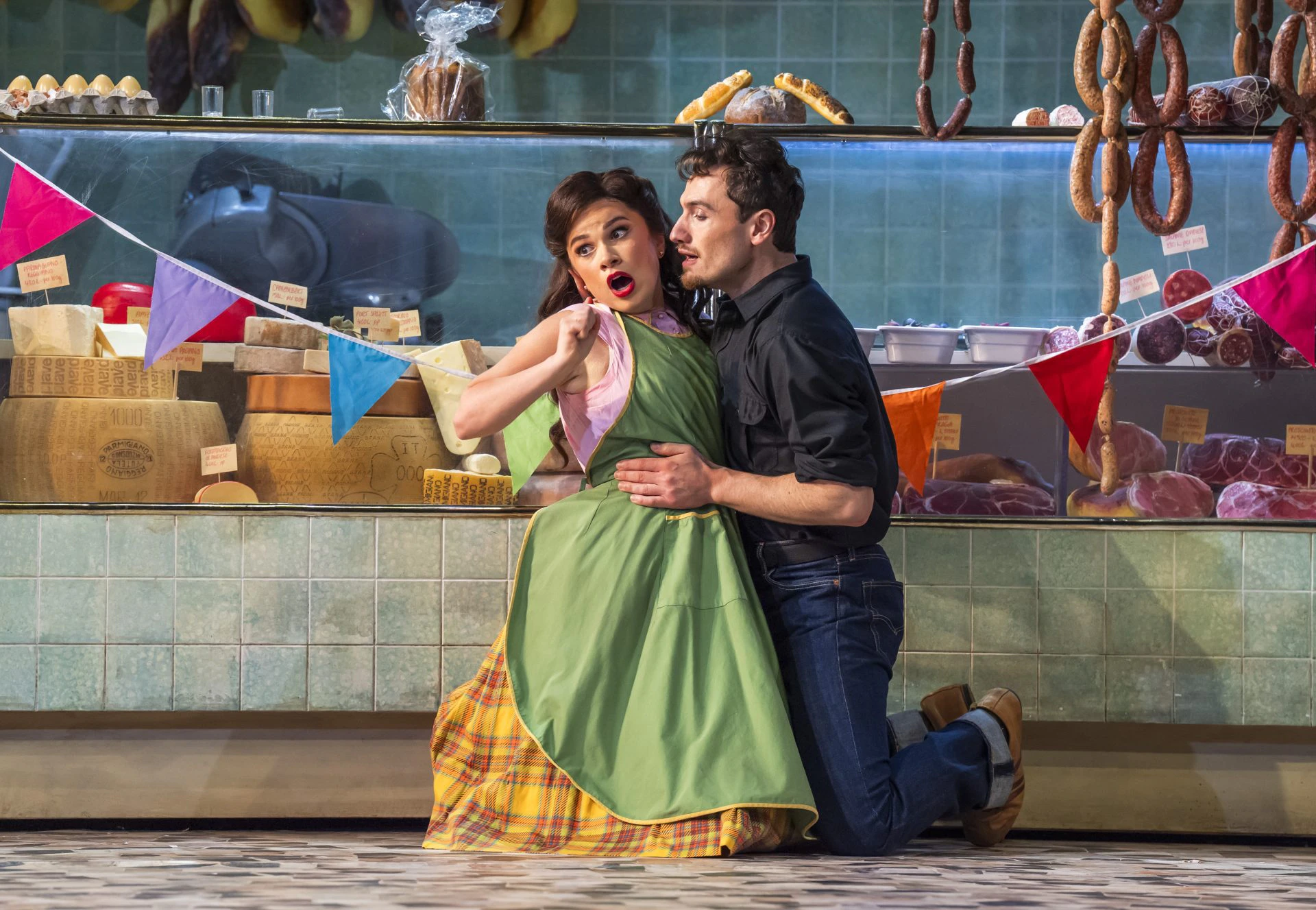
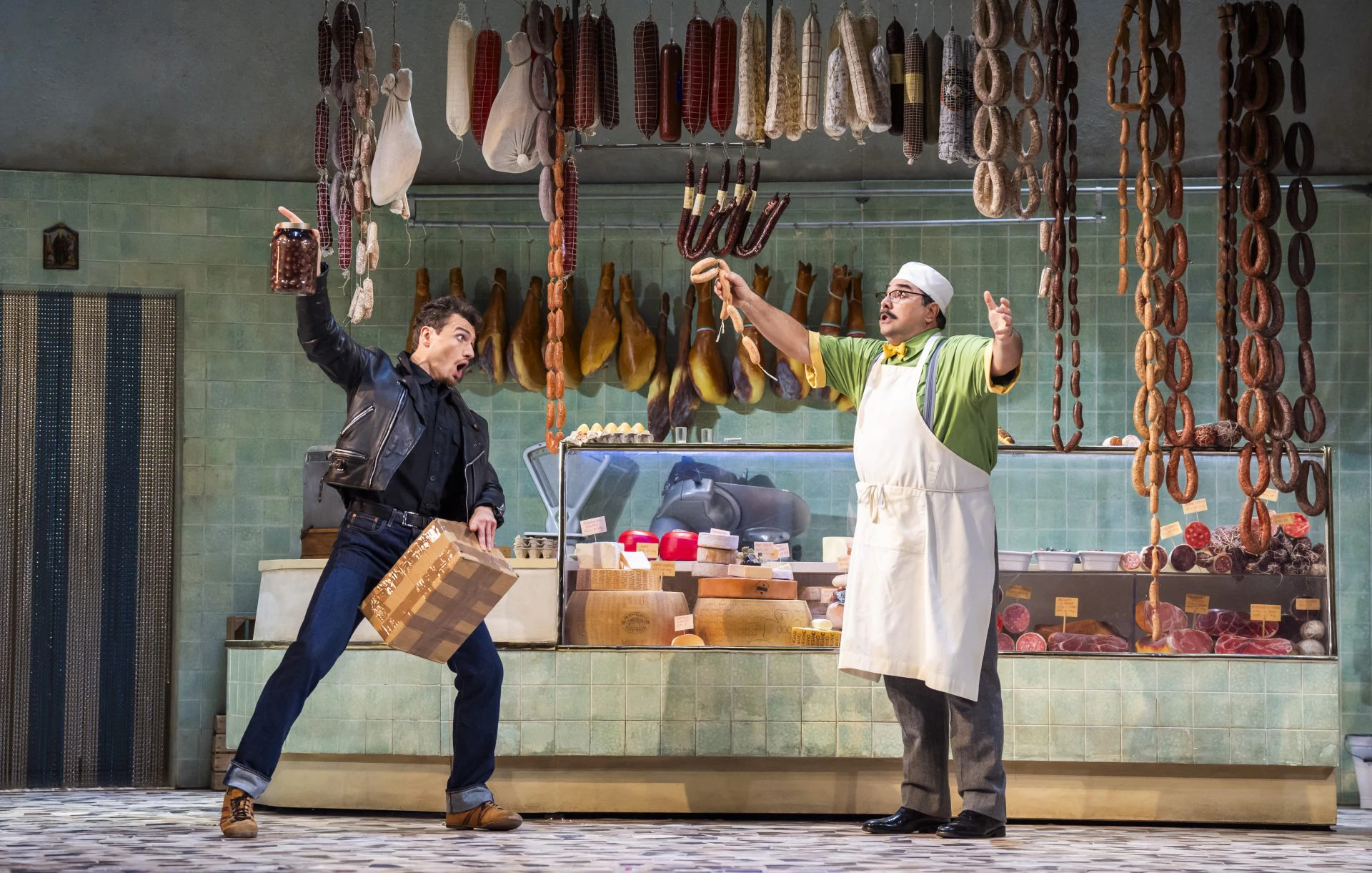
‘There is a lot of text in Turco to milk, a lot of really good comedic situations. In the second act, we stage a scene in a salumeria [delicatessen]: it appears to be about a cultural exchange of food at first, but it becomes something brutal with a duel. It’s not just comic; the characters take themselves seriously and we never treat them as archetypes alone: there are motivations, weaknesses and tragedy in each scene.’
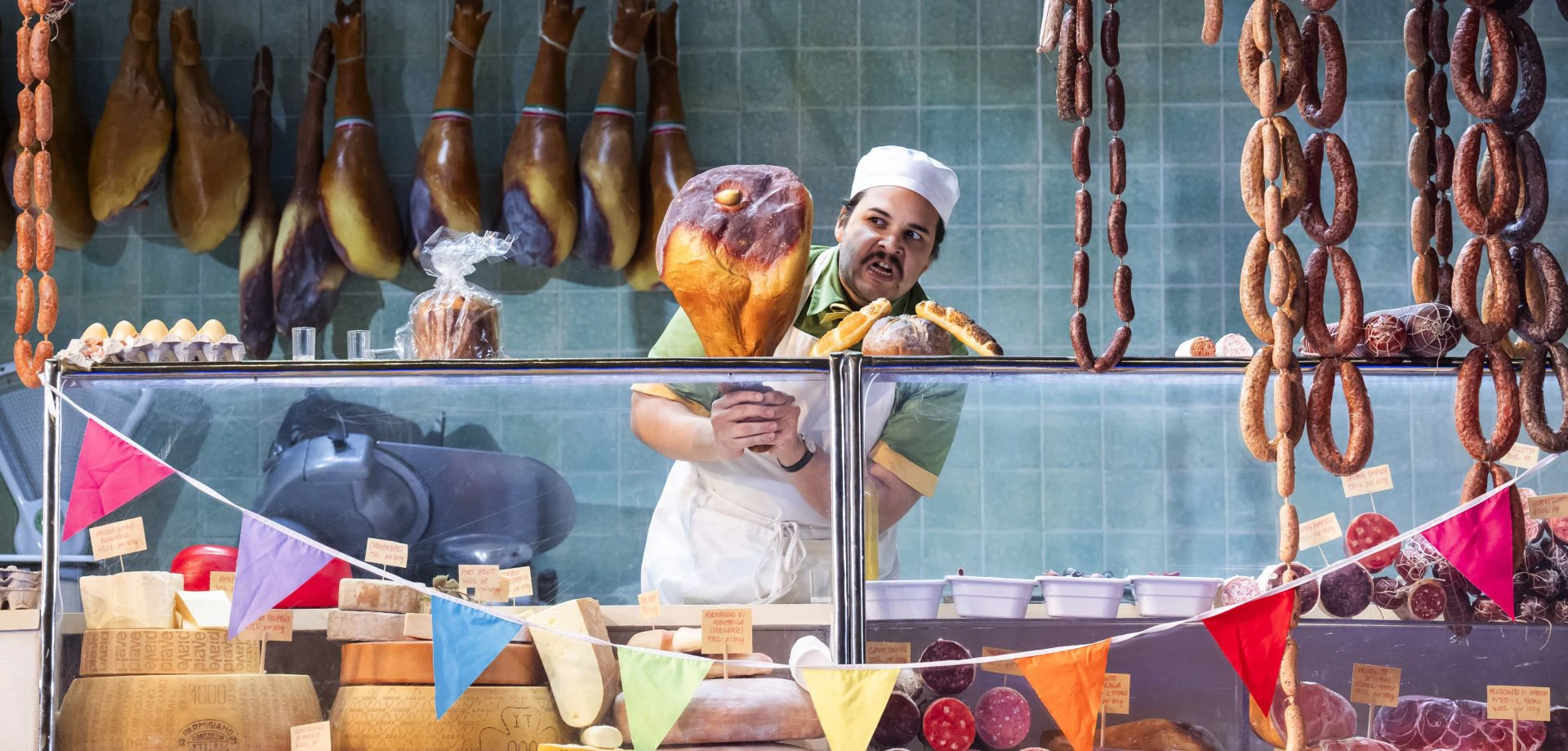
Timing is a recurring theme during my conversations with both directors. ‘One thing I’m obsessed with is processing time to understand something,’ says Ian. ‘I still believe in the basics,’ he adds. ‘Comedy is in the feet: getting someone in the right position to say the payoff or punchline, for a key comic moment to land. Comedy has to have precise choreography. That precision involves when the thought happens: before, during or after the line.’ He acts out an exaggerated theatrical thought process to demonstrate what he means: ‘“The door…’” a pause of around two seconds while he ponders the situation with furrowed brows and then his eyes widen in a vivid eureka! moment: ‘“I saw her there!”’. I realise I have seen such epiphanies landing well with audiences on the Glyndebourne stage on several occasions.
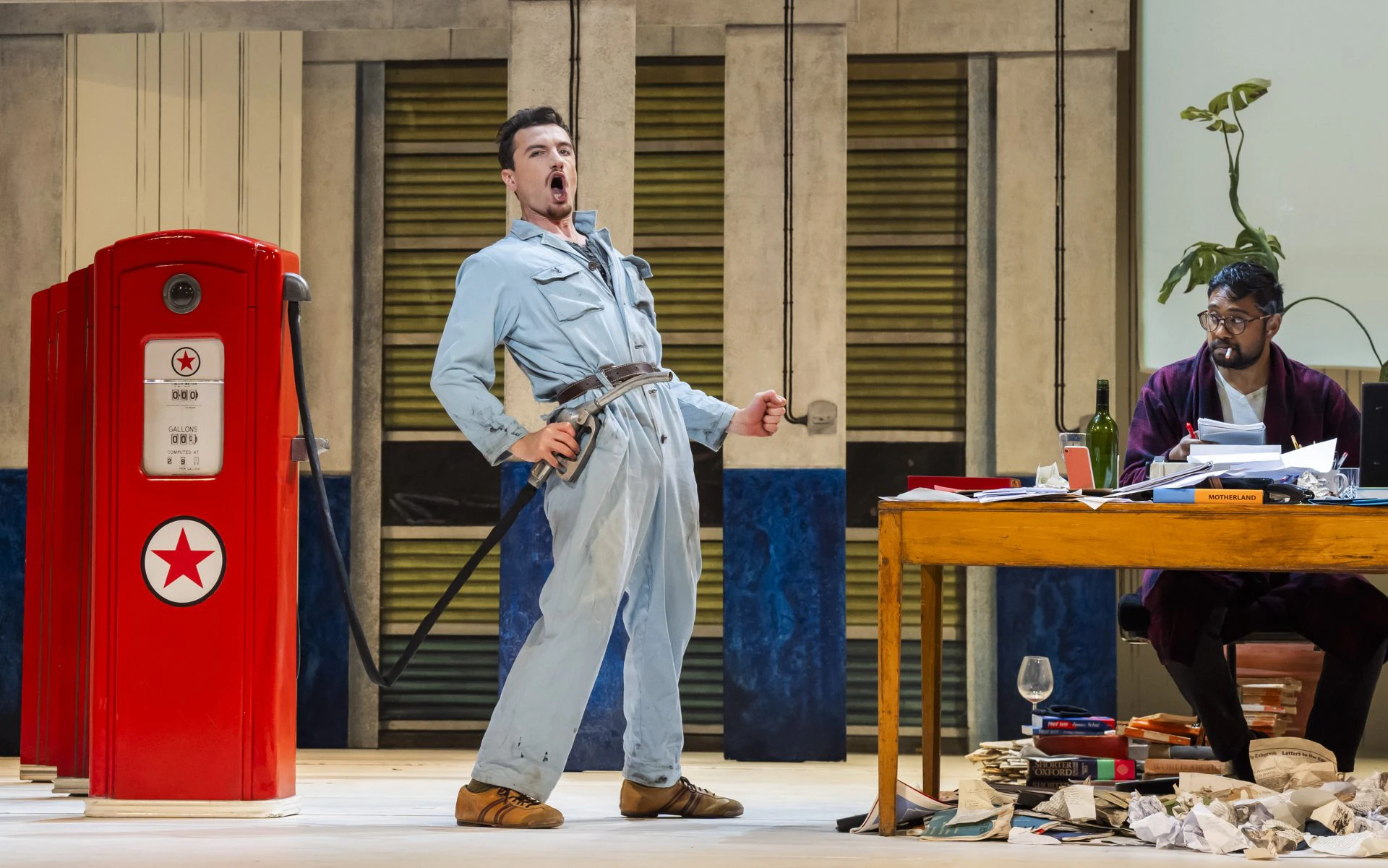
‘In this production where we have the poet imagining writing the story, he is making the action happen,’ says Mariame. ‘The way he freezes his characters during his creative process, these fermatas [a pause in musical notation], are very useful for us, really funny, because they reflect how the story is unfolding before our eyes. There is a pause, suspending the tension: “What’s gonna happen…” the audience is thinking. They are a wonderful comedic tool.’
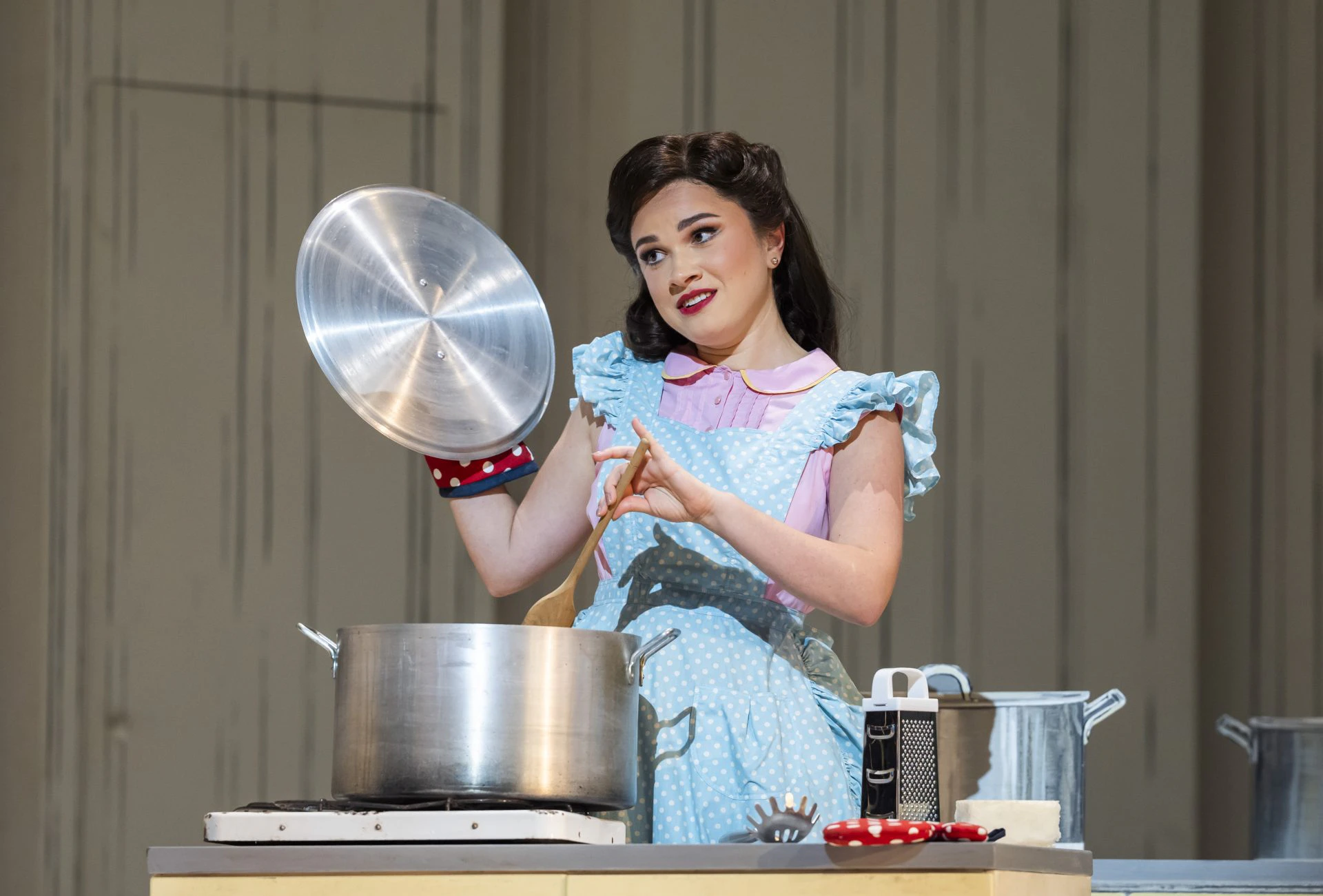
The ‘beautiful rehearsal time’ that Ian mentioned can also result in some alchemical discoveries in the cast. In the Festival 2021 production, it transpired that Rodion Pogossov (Geronio) and Elena Tsallagova (Fiorilla) had both trained as ballet dancers. ‘This meant that in the dream sequence, they could express it through ballet, and the two singers created the most remarkable thing,’ says Ian. ‘It wasn’t choreographed: it was hilarious and beautifully judged and stunning.’ This initial collaboration between the two performers will be recreated in 2026: Rodion is returning as Geronio and will be joined by Elena Villalón as Fiorilla, who will make her Glyndebourne debut.
Mariame points out that the Festival 2021 production was made during Covid restrictions so onstage interactions were limited, including singers not being permitted to hand each other props and not being able to sing directly towards one another. ‘Part of my job in 2024 was releasing that where necessary,’ adds Ian. ‘Funnily enough the distancing was quite useful for the rigidity of the comedy onstage so we did retain a lot of it. Releasing the chorus so they can dance with each other was delightful though: it’s now more intimate and fun’.

All of the work crafting the comedy throughout rehearsals for Turco should make for what Ian calls ‘a wildly entertaining evening’. He adds that ‘the brilliance of Mariame’s production is that the poet’s witty ideas are manifested into 3D instantly. There is a heightened sense of theatricality to certain scenes because sometimes what is around the characters doesn’t make sense to them, then they look over to the poet to come up with a more appropriate idea. It looks into the alacrity of a mind and how it can create ideas and make mistakes. It’s a fresh sort of humour: genuinely funny, visually surprising and sumptuous. We are thrilled to be bringing Turco back to life for our wonderful Glyndebourne audience.’
Joe Fuller is the Glyndebourne Press & Publications Officer.
This article first appeared in Recit – the Glyndebourne Member magazine. Discover all Member benefits.
Photos by Tristram Kenton.


