


Le nozze di Figaro
Le nozze di Figaro is Glyndebourne’s most performed opera. It opened our very first Festival in 1934, and was also the first to be performed in the new opera house in 1994.
Le nozze di Figaro at a glance
Wolfgang Amadeus Mozart
Festival 1934
Italian
Autumn Season 2026
Opera buffa
Who wrote Le nozze di Figaro?
The music for Le nozze di Figaro was written by Wolfgang Amadeus Mozart, with libretto by Lorenzo Da Ponte. It was first performed in 1786, at the Burgtheater in Vienna. Le nozze di Figaro was first performed at Glyndebourne in 1934 – it launched the festival, with Audrey Mildmay herself as Susanna – and has remained a staple of the Glyndebourne repertoire ever since. The current Glyndebourne production directed by Mariame Clément, premiered at Festival 2025.
A brief introduction
When a lusty aristocrat tries to seduce his valet’s pretty young fiancée, his servants and long-suffering wife conspire to teach him a lesson in fidelity.
A revolutionary comedy in every sense, Mozart and Lorenzo Da Ponte’s adaptation of Beaumarchais’s infamous 1778 play about warring masters and servants takes a topical satire and swells it into a human drama – warm to the touch. The battle between both classes and sexes remains keenly bladed, but the characters themselves are softened and rounded by Mozart’s music into feeling, fallible and all-too-real personalities.
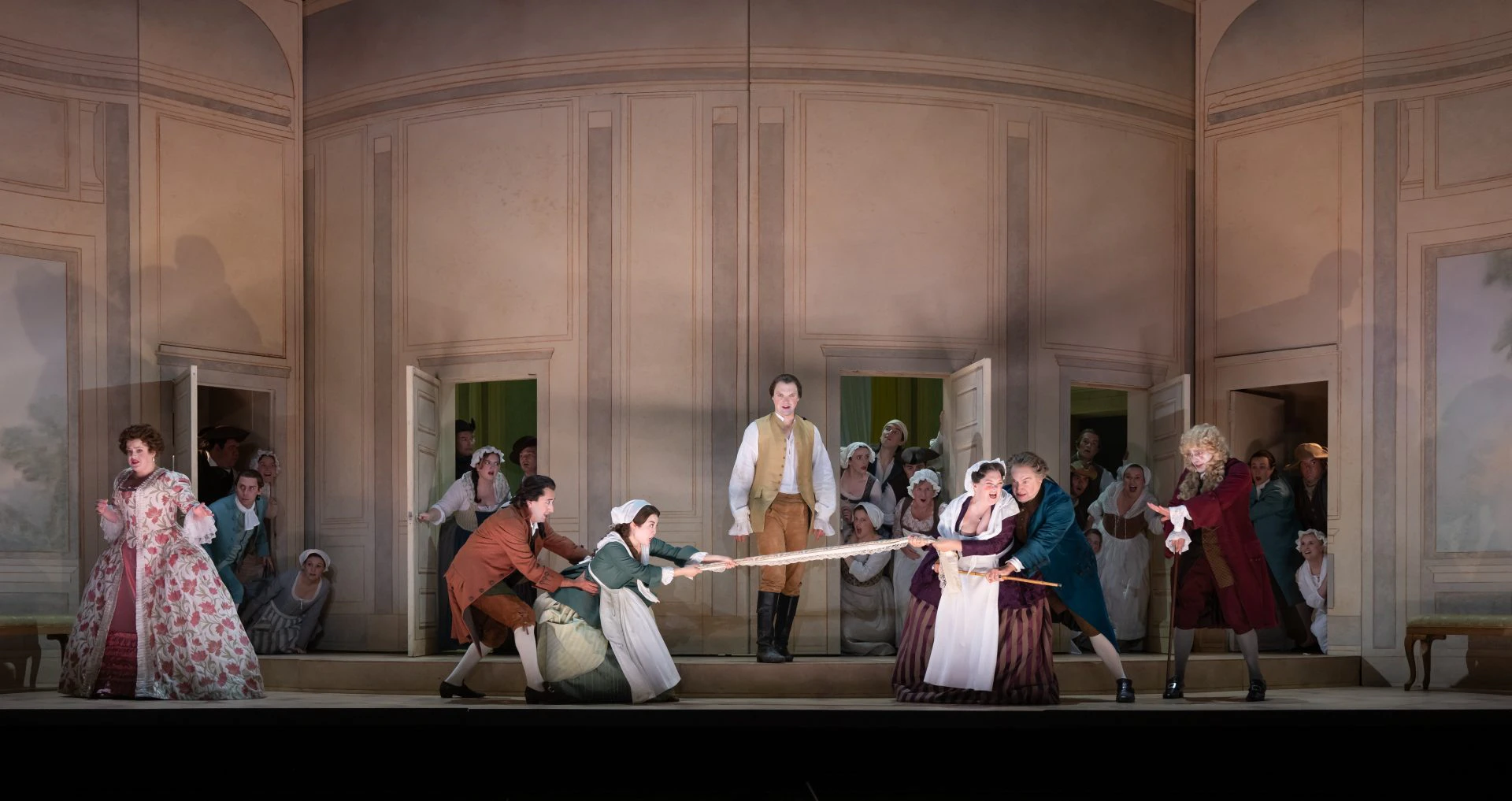
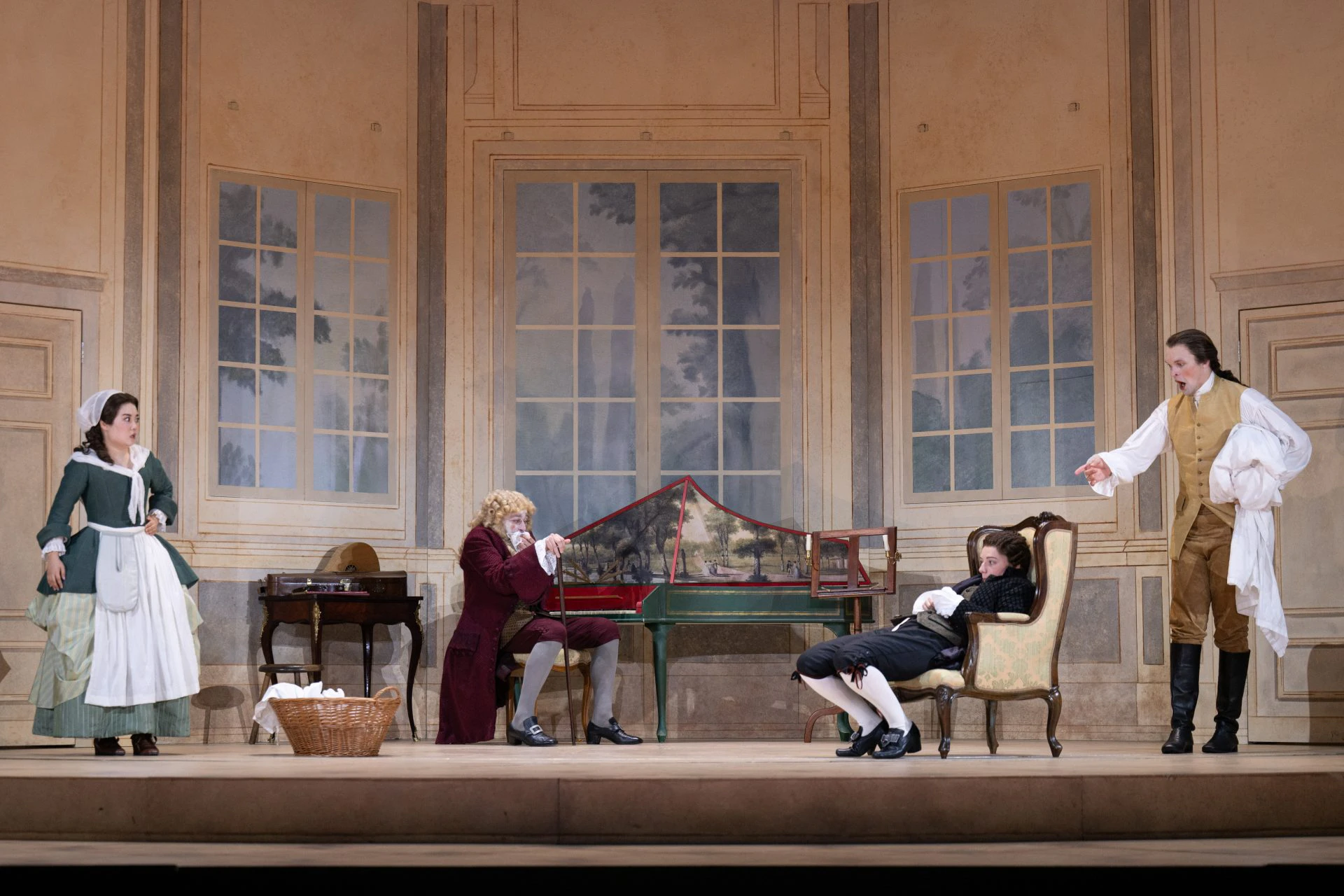
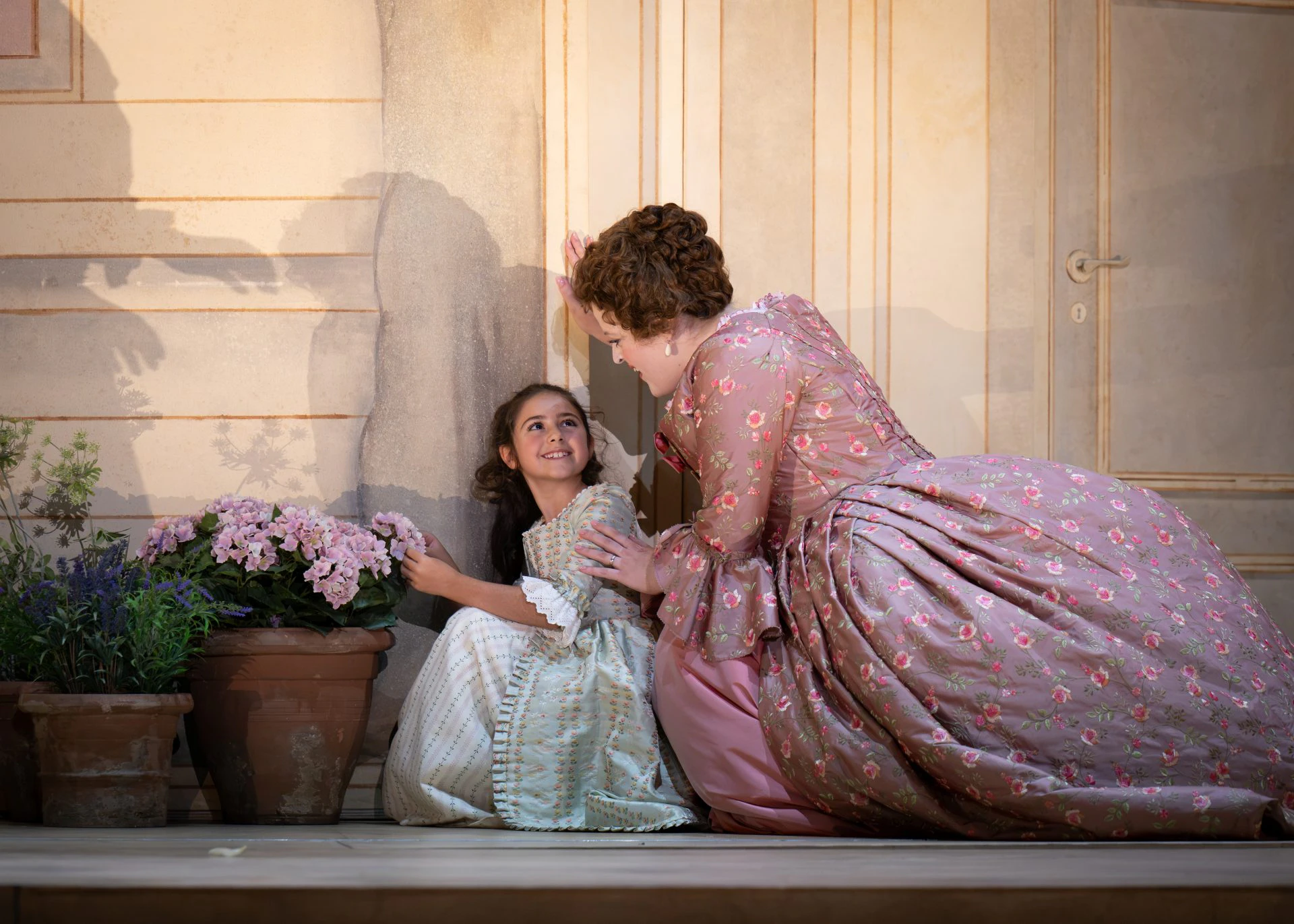
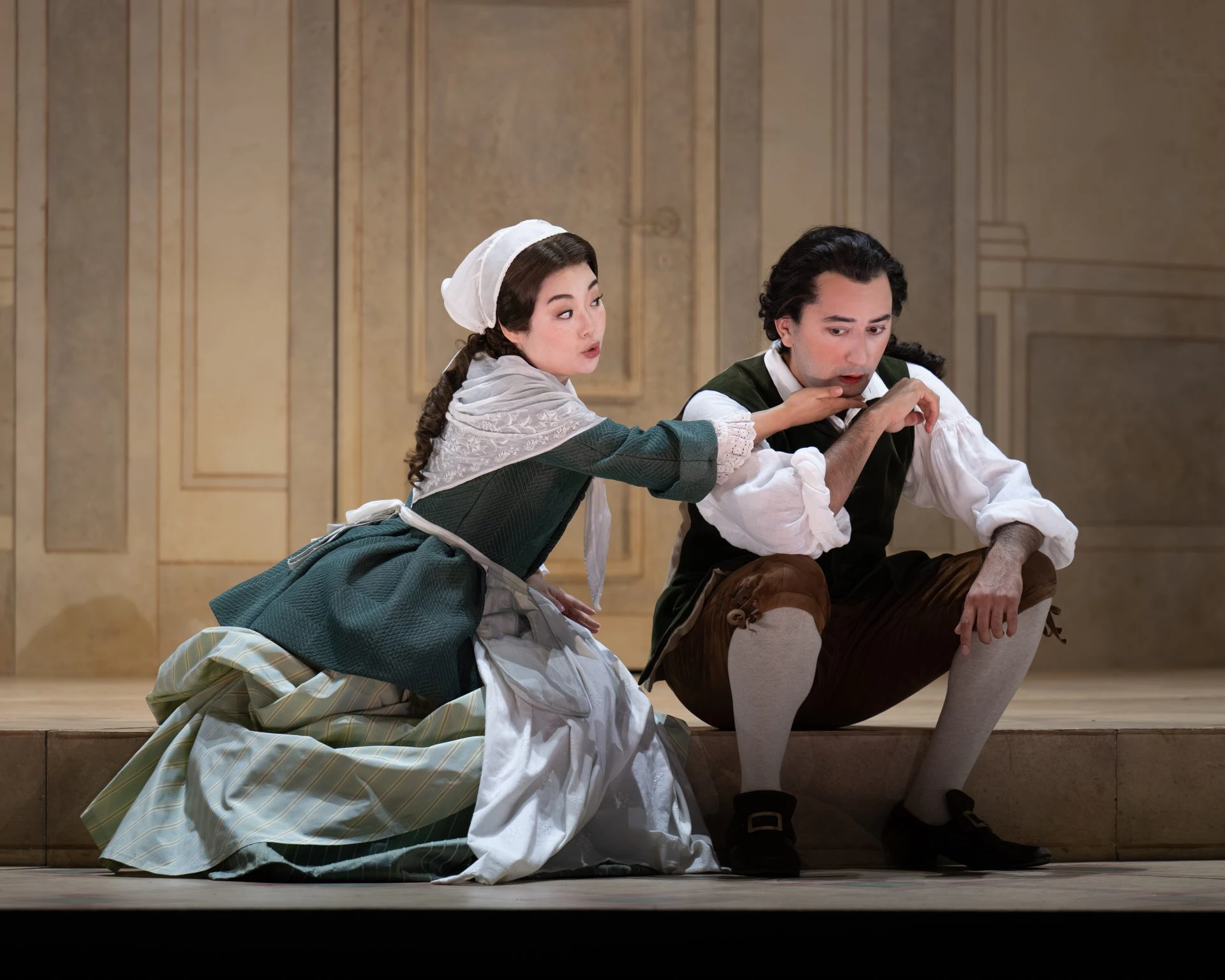
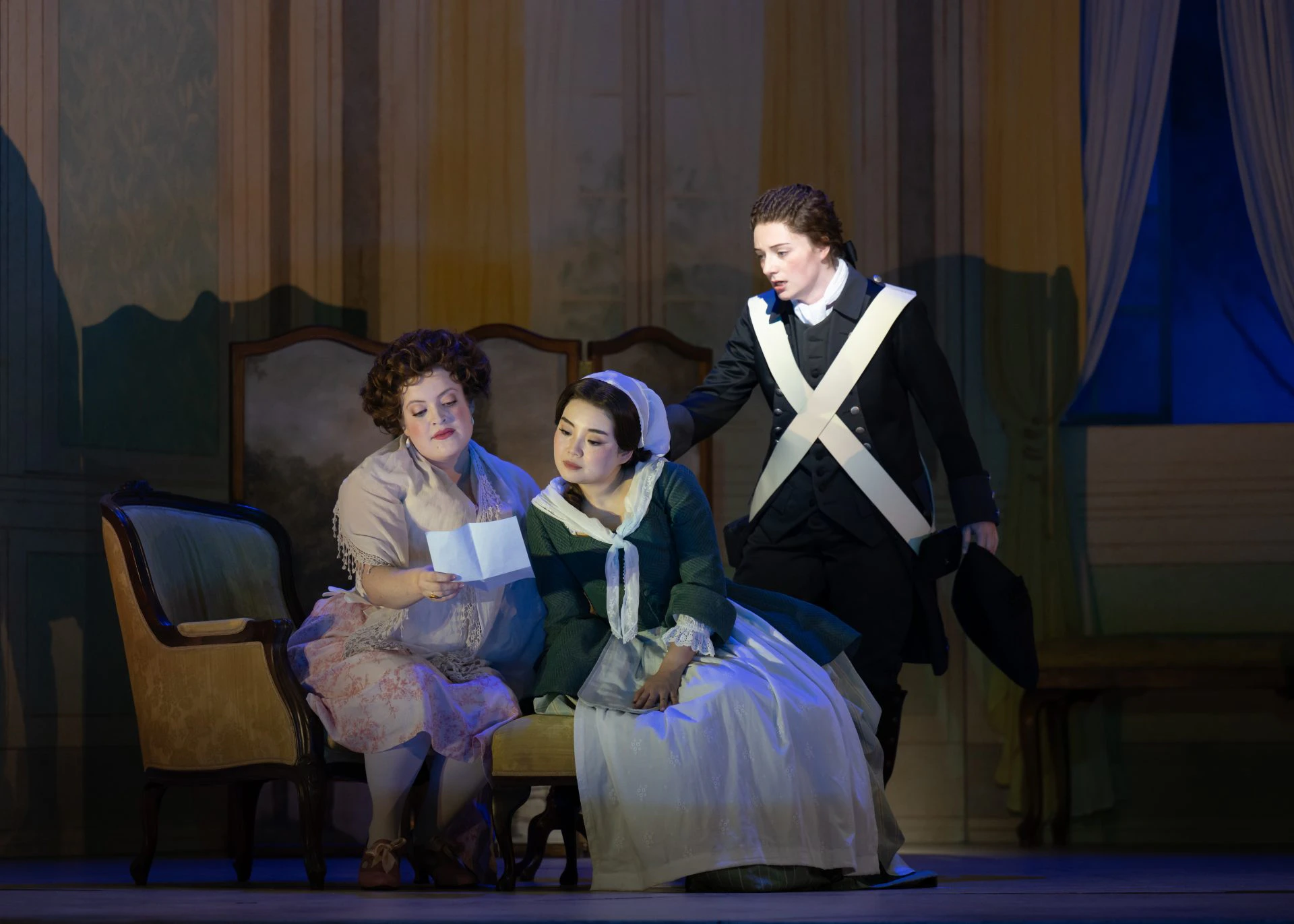
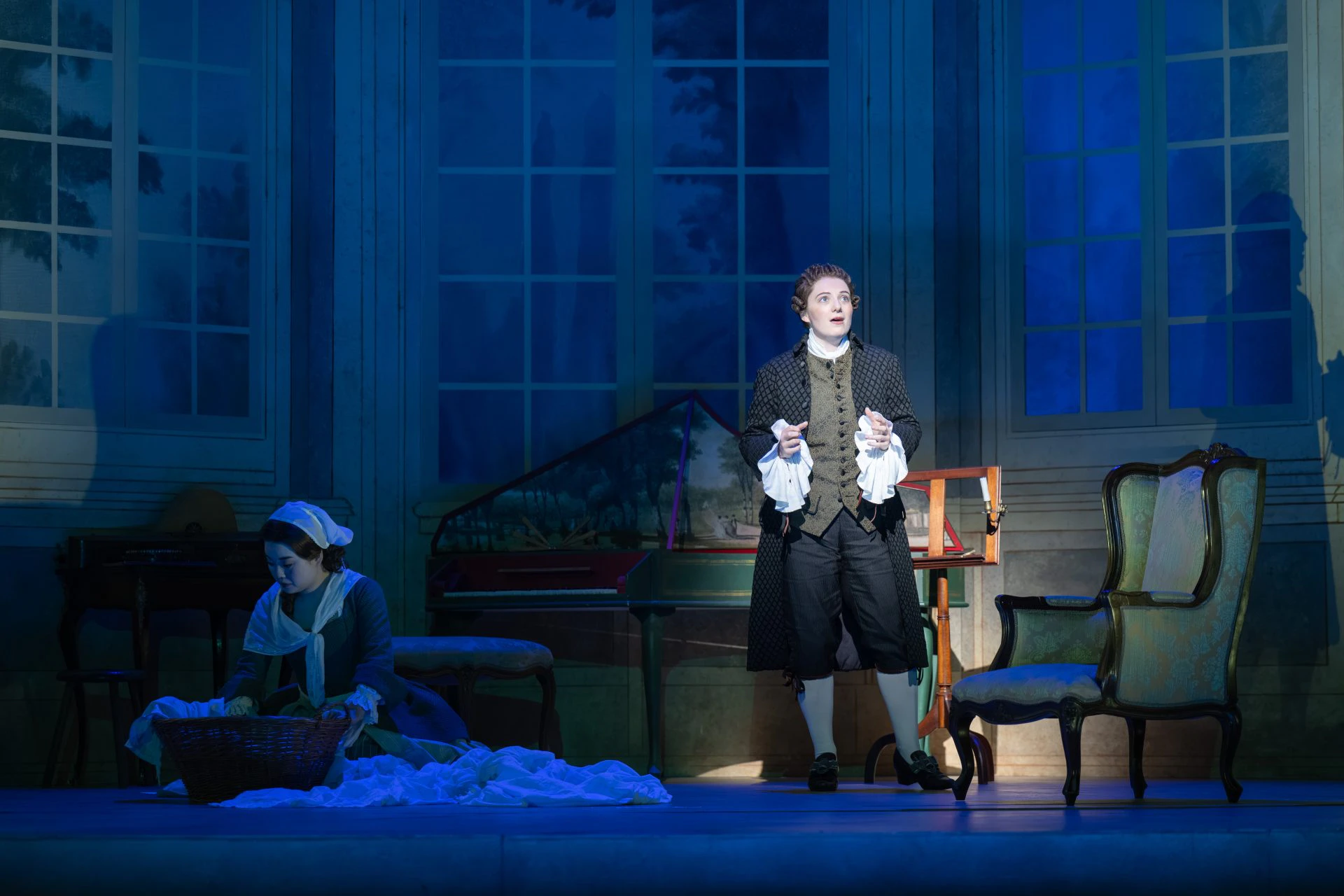
Photos by ASH
Synopsis
Susanna makes final adjustments to a wedding-cap she has made, while her fiancé Figaro measures up the bedroom the Count has given them in the chateau. Susanna points out its dangerous proximity to their master, reminding Figaro of the droit du seigneur – the feudal tradition allowing the Count to take any maidservant before her wedding night. Figaro vows to thwart him.
Dr Bartolo and his former servant Marcellina enter. She begs him to help enforce a marriage contract between herself and an unwilling Figaro – who signed as collateral for a loan he cannot repay. Bartolo relishes the prospect of getting even with Figaro. Revenge shall be his!
Pageboy Cherubino begs Susanna to intercede with the Countess: the Count found him with the gardener’s daughter Barbarina, and has sent him away. At the mercy of his teenage hormones, the boy can think of nothing but love. Seeing the Count approaching, Cherubino hides.
The Count pressures Susanna to meet him at dusk. But singing teacher Basilio’s arrival forces the Count to hide. Enraged by Basilio’s gossip of Cherubino’s crush on the Countess, the Count suddenly emerges, his jealousy only intensified by the discovery of Cherubino himself.
The Countess laments her husband’s neglect. Figaro explains the Count’s designs on Susanna, and his own plan to buy time by sending Cherubino (disguised in women’s clothes) to meet the Count instead. Cherubino arrives to try on his borrowed outfit. Taking advantage of Susanna’s brief absence, he flirts with the Countess. But – once again – the Count’s arrival forces him to hide. He locks himself in the closet. Susanna returns, unseen, and waits.
Suspicious that his wife is concealing a lover, the Count fetches tools to unlock the door, taking the Countess with him. Susanna immediately swaps places with Cherubino, who escapes through the window. Returning, the Countess confesses to her now-apoplectic husband that Cherubino is inside. Both are nonplussed when Susanna emerges instead.
Figaro arrives. He’s followed by gardener Antonio, angry that someone has jumped from the window onto his plants. Figaro claims it was him. The humiliated Count is relieved when Bartolo, Marcellina and Basilio enter, demanding that Figaro marry Marcellina or repay his debt.
The Countess now sets her own plan in motion: Susanna will finally ‘agree’ to a rendezvous with the Count – an assignation the Countess herself will keep. But the Count’s rapture turns to fury when he overhears Susanna rejoicing with Figaro.
Alone once again, the Countess hopes to yet save her marriage. Meanwhile, Marcellina has won her court case: Figaro is hers! Figaro pleads that he requires the consent of parents he has never known. In his description of his unusual origins, Marcellina recognises Figaro as her long-lost son; Bartolo is his father. A horrified Susanna arrives to find Figaro embracing her rival, but soon rejoices with the reunited family.
Susanna and the Countess write a letter to the Count, inviting him to the rendezvous; a pin must be returned as acknowledgment.
The wedding celebrations begin. Susanna slips the letter to the Count, who drops the pin as he opens it – catching Figaro’s attention.
That night in the garden, Barbarina laments the loss of the pin the Count gave her to return to Susanna. A jealous Figaro, suddenly convinced he understands the situation, resolves to interrupt the lovers’ ‘tryst’.
Disguised as one another, Susanna and the Countess enter to ensnare the Count. The Count woos ‘Susanna’. Figaro, seeing through Susanna’s disguise, feigns seducing ‘the Countess’. He is caught by the Count, who refuses to forgive his wife for her apparent infidelity. But the real Countess reveals both herself and the truth, and all is set right.
videos


